Selected scenes
BRZRKR in pictures.
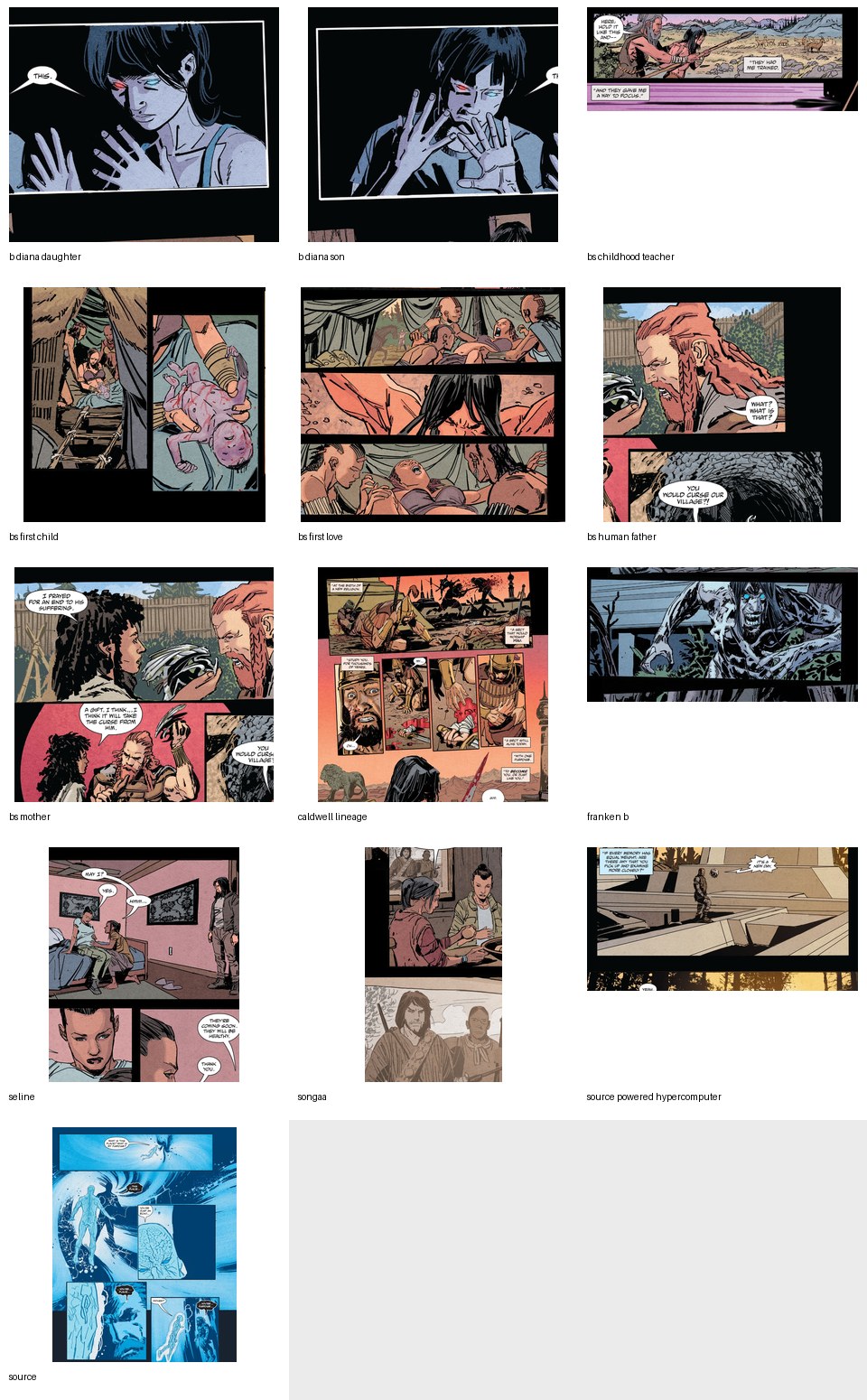
Spoilers: This article discusses Protocol X, B's disappearance, and the contact sequences in BRZRKR #8-12.
Time-and-space displacement describes what happens when Protocol X removes B from the ordinary physical environment. The term is useful because the event is not presented as a normal teleportation, a conventional death, or a simple hallucination. B remains conscious, Diana is altered by the same force, and communication continues across a condition in which distance and duration no longer behave normally. The series treats displacement as a consequence of trying to reach the Source through B's unusual biology.
Before the experiment
The government program spends years turning B's memories and body into experimental evidence. Diana's sessions reveal the lightning contact, the prehistoric origin, and the material clues that later researchers call impossible. Caldwell and the scientists begin to suspect that B is not only hard to kill; he is connected to a system capable of moving information or energy across forms that human equipment cannot ordinarily reach.
Protocol X grows out of that suspicion. The apparatus is built as a controlled attempt to cross a threshold. It uses machines, power, monitoring, and B's body as the active participant. The room is designed to keep the event inside a human chain of command, but the experiment's result immediately exceeds that chain.
The moment B vanishes
The countdown gives the scene a military shape. Personnel have procedures, measurements, and an expected endpoint. When the energy event arrives, the room becomes something else. B disappears from the physical site rather than being destroyed in the ordinary sense. The people around the apparatus cannot retrieve him through the methods they prepared, and the program loses the ability to define the result by its own vocabulary.
The disappearance is frightening because B has always been the person who returns. His body can be crushed and still come back. Protocol X removes the body from the room without giving anyone a body to repair. The event therefore attacks the program's basic assumption: that every problem involving B can be solved by applying more force or waiting for regeneration.
Diana's exposure
Diana is struck by the same phenomenon. Her experience creates the human bridge between the laboratory and the displaced B. She does not simply watch an instrument fail. The experiment changes her relationship to energy, perception, and contact. Later scenes show her reaching B in ways that are not available to the other personnel, and the relationship between them becomes reciprocal rather than observational.
The displacement gives Diana a new responsibility. She is the person who can still recognize B when the program can no longer locate him. Her connection is emotional and physical at once, but the issues refuse to name it as a single scientific process. The lack of a neat label preserves the strangeness of what she has undergone.
What happens to time
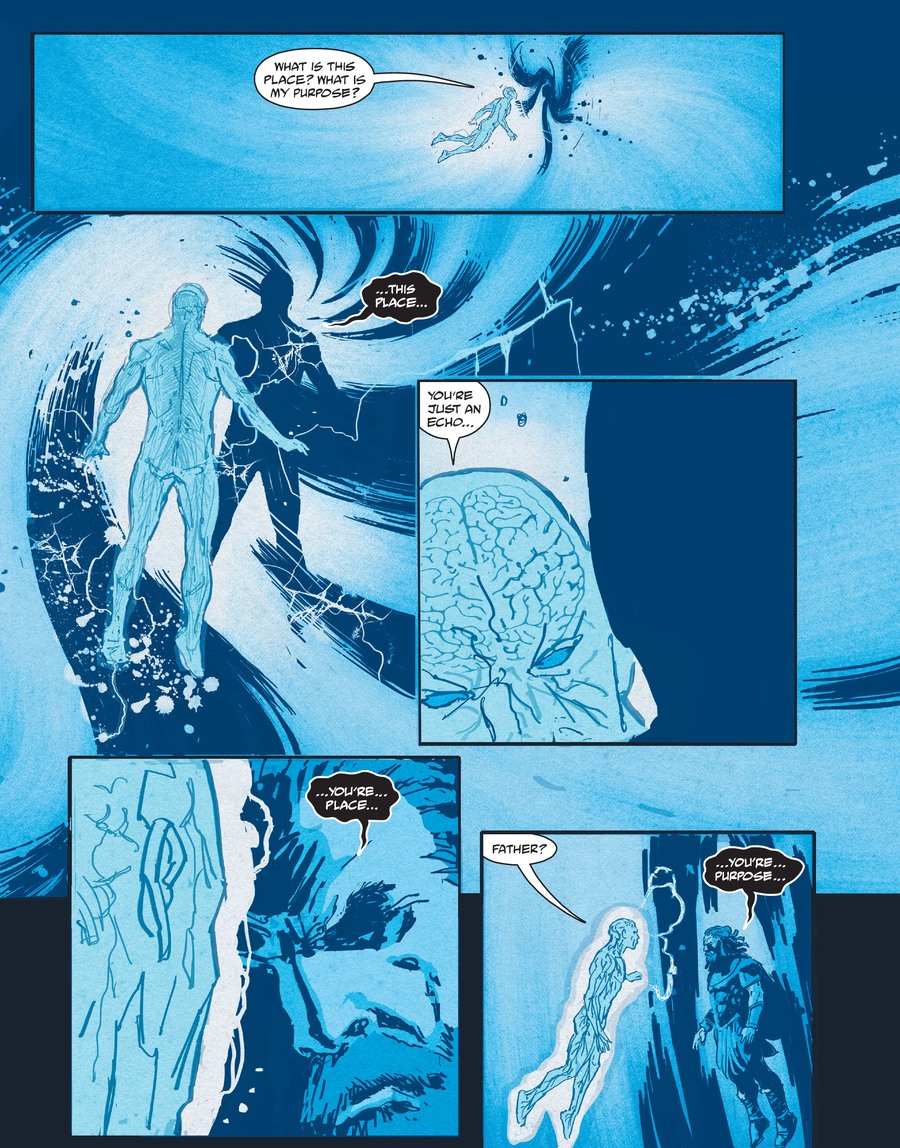
The contact sequences make duration uncertain. B experiences events and conversations without the ordinary markers of a room, a clock, or a changing landscape. Diana reaches him across a separation that can feel immediate and immeasurable at once. The story does not supply a conversion between the time experienced inside the displaced condition and the time passing for the people outside.
This uncertainty has a narrative consequence. B is not simply waiting in a distant location to be rescued. His state changes what rescue means. Diana must find a way to establish recognition and shared intention before a physical route can exist. The process resembles memory because an image, feeling, or voice can become a path, but it is not reduced to memory. B's consciousness persists in a place where ordinary chronology cannot contain it.
The contact realm
Time-and-space displacement leads into the contact realm associated with Protocol X and the Source. The environment may be a field, an interface, a parallel condition, or a form of information exchange. The comic shows enough to establish function and deliberately withholds a map. B can perceive a presence larger than the human program, while Diana can approach through their bond. The scene is concrete in its emotional stakes even when its physics remain uncertain.
The realm also changes the meaning of B's body. He is not reduced to a ghost, but he is no longer located in the same way as the body in the apparatus. Consciousness, matter, and identity are temporarily separated. That separation anticipates the later mortality transfer, in which the condition attached to B can be moved without simply moving his memories or personality with it.
Caldwell's failure of control
Caldwell believes that knowledge and equipment can turn B's origin into a manageable program. Protocol X exposes the weakness in that belief. The experiment may have achieved contact, but the result is not owned by the people who built the machine. Caldwell cannot command the Source, and he cannot make B's return occur on a schedule. His response—more research, more containment, and more attempts to control the consequences—deepens the danger.
The conflict is not between science and magic. It is between inquiry that accepts uncertainty and power that treats uncertainty as a temporary inconvenience. Diana continues asking what the event does to B. Caldwell asks how quickly it can be repeated. The displacement makes that difference visible.
Return and transformation
B's return is enabled by the relationship with Diana and by contact with the Source-linked system. He does not simply reappear where he began. The experiment has altered the conditions of both lives. Diana's abilities, the hypercomputer's role, and the final mortality process all grow out of the displacement. The event is therefore a turning point rather than a detour.
The return also changes B's understanding of his origin. Earlier memories provide images and clues. The displaced state offers direct contact, but direct contact does not equal complete explanation. B learns enough to pursue mortality and to confront the Source while still lacking a full account of every historical event. The series treats revelation as a change in relationship, not a final lecture.
What displacement does not prove
The scenes do not prove that B can travel anywhere by thought, that death is always reversible, or that every memory takes place in the contact realm. They do not establish a stable alternate universe, a universal afterlife, or a technology that the government could reproduce with ordinary equipment. The event is specific to B, Diana, the apparatus, and the Source-linked conditions shown in the final arc.
These boundaries matter because other BRZRKR stories contain rituals, alchemy, vampirism, and inherited supernatural traditions. Similar imagery does not make every system one mechanism. Time-and-space displacement belongs to the Protocol X and Source branch unless a later publication explicitly connects it to another tradition.
Significance
Time-and-space displacement is the point at which BRZRKR stops treating B's immortality as a problem that can be solved inside a laboratory. The body is still involved, but the answer now includes memory, love, consciousness, and a nonhuman intelligence. B's disappearance forces Diana to become more than a researcher and forces the program to confront a boundary it cannot secure.
The episode also gives the series its most important image of separation. B can be cut apart and regenerate, yet the deeper threat is being removed from the people who know him. His return matters because it is made possible by recognition and trust rather than by superior force. The story's science reaches its limit; a relationship carries the rest of the way.
[1] Reeves, Kindt, Garney, Crabtree, and Robins, BRZRKR #8-9, Protocol X, B's disappearance, Diana's exposure, and contact.
[2] Reeves, Kindt, Garney, Crabtree, and Robins, BRZRKR #10-12, Source contact, hypercomputer work, and mortality transfer.