Selected scenes
BRZRKR in pictures.
Spoilers: This article discusses the historical one-shots and the ways different societies remember B.
Historical myths of B are the stories that grow around an immortal person when witnesses cannot explain what they have seen. Across eighty thousand years, B is called a protector, a prisoner, a king's weapon, a monster, a spirit, a soldier, and a source of forbidden knowledge. Some accounts preserve real events. Others compress centuries into a legend. The important fact is not that every myth is true. It is that each myth records what a community needed B to mean.
A life too long for one name
B's own name changes with language and circumstance. Unute, the Berserker, the Storm Who Walks, and other titles describe roles rather than a stable identity. A village names the power it fears. A court names the defender it wants to possess. A government uses a code and a contract. The names accumulate because B outlives the social world that gave each name its force.
The myths do not erase the person beneath them. B remembers the people who used the titles, the places where the stories began, and the violence hidden inside the praise. His perfect memory means that a legend can remain present as an injury. A community may celebrate a guardian while B remembers the night it demanded another battle.
Atlantis
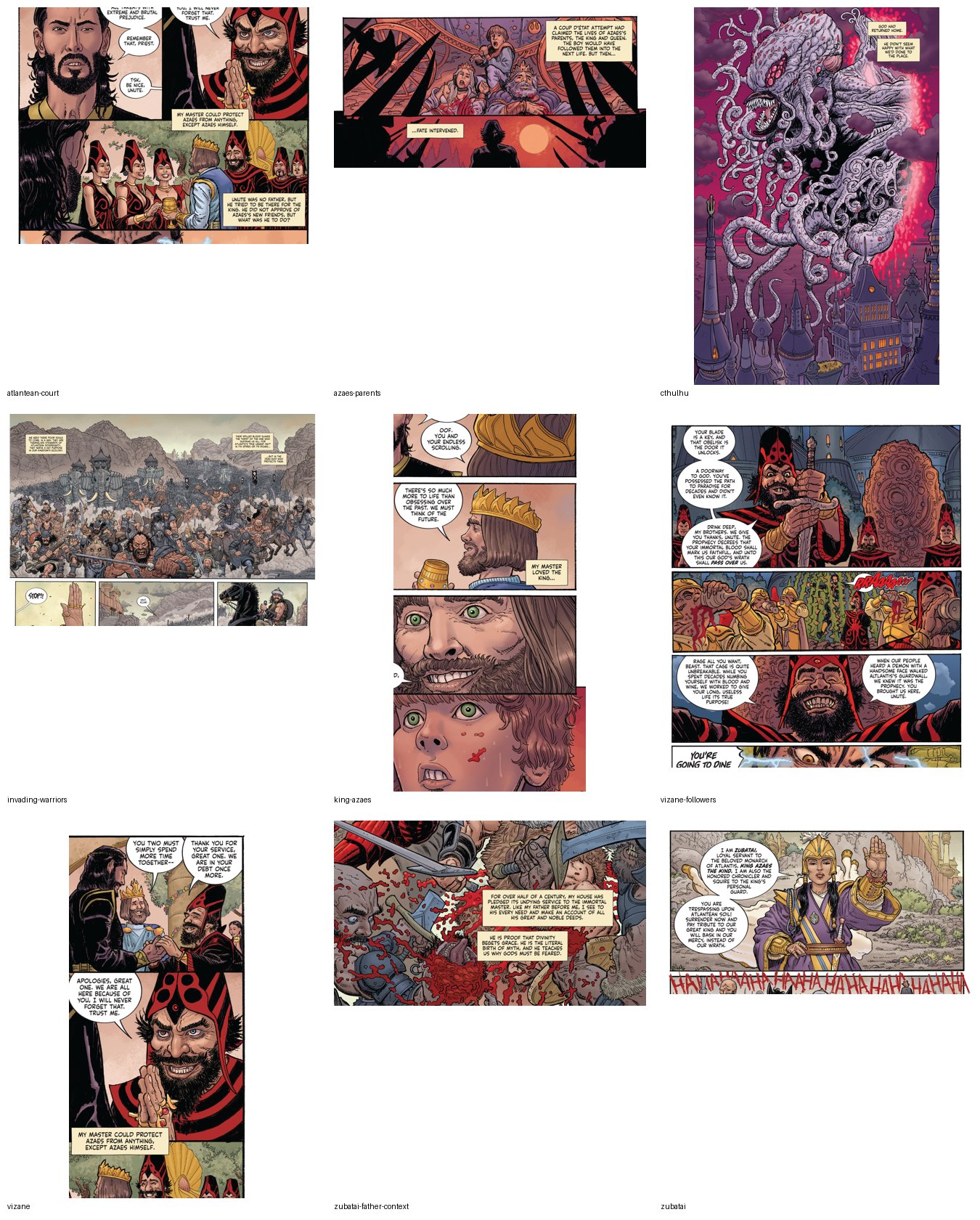
In Atlantis, B becomes a protector associated with King Azaes and the city's court. The story gives him a place in political life, but the city's final ritual turns that protection into ownership. Vizane uses B's blood, the primordial-ore sword, the obelisk, Aklo texts, and the northeastern tower to open a gateway. The mythic language says the city has been chosen; the event shows that the city has chosen to risk itself around B.
B kills Cthulhu, but the entity's death dissolves Atlantis. The surviving memory can therefore tell two stories: B saved the city from a god, and B's presence is linked to the destruction. Both are incomplete without the other. Myth turns a complicated chain of decisions into an image of a lone guardian, but the comic keeps the political conspiracy visible.
Olos and Washukanni
The Olos material remembers B as a captive and a spectacle. King Arnak's court places him in a palace, prison, and arena. Asana learns that the prisoner is a person rather than an ordinary beast, yet intimacy does not remove the restraints. The city can praise B's strength while denying his freedom.
The destruction of Olos and Washukanni reveals the weakness of political myths. A king can claim an immortal as property, but he cannot make the kingdom immortal. The people who die, flee, or lose their homes disappear from the heroic version of the story. The one-shot restores their presence by showing the civilian and emotional cost of the campaign.
The Mongol era
Genghis Khan's empire treats B as a military advantage. In this version of the myth, the immortal becomes the soldier who can enter a siege and return from a battlefield that would destroy an army. Opium reduces pain and some of B's violent compulsion, making service easier to demand while deepening dependence.
B's break from Genghis rejects the idea that an empire can define him permanently. The historical record may remember the victories and the scale of conquest. B remembers the moment he refused to remain inside that story. His departure does not undo the deaths, but it prevents the empire from becoming the only account of who he was.
American legends
In the Missouri Ozarks and Kansas Territory, B becomes a local presence in a landscape of border violence, estates, trading routes, and battlefields. Maybell, Winston Tunt, and the Man in the Tree incident show how quickly an encounter can become folklore. Witnesses see someone survive or appear where a body should be and reach for the language available to them: angel, monster, ghost, or guardian.
The American stories are grounded in real historical places and conflicts without claiming that B caused every event. The fictional layer sits inside the historical layer. Mine Creek remains a real battlefield even when B appears in a remembered scene. That relationship gives the myths moral weight. Turning a real conflict into a legend can make the violence feel inevitable, but B's presence should not erase the people whose lives were already caught in it.
The alchemical memory
The Lost Book of B. records another myth: B as the answer to a philosophical and scientific problem. Zosimus and others treat his body as evidence that life can be extended. Lugalṭur becomes a living consequence of the experiment. Later readers may remember the alchemical operation as a discovery, but the story insists that the result is a person who needs protection and freedom.
This myth changes the meaning of creation. B is not only the immortal who cannot die. He is the material from which another being can be made. The danger is not that the alchemists misunderstand a formula. It is that they understand enough to create life and still fail to recognize its right to choose.
Maritime and supernatural stories
The Bleeding Tide adds a sea-bound myth shaped by vampirism, inherited power, the Captain, Myu, and the Sorceress. B is recovered from the ocean and enters a community whose traditions are not explained by the Source or the government. The maritime story remembers him through blood, predation, rescue, and family secrecy.
This branch proves that no single myth can contain the franchise. The Captain's crew can recognize a survivor without recognizing B's origin. Their account is true to their experience even when it does not explain the cosmic history. Myth is local knowledge: it tells a community how to live with what it has seen.
Who controls a myth
Powerful people benefit from certain versions of B. Kings turn him into a protector. Cults turn him into a sign. Governments turn him into a program. A legend can make exploitation look like destiny because it hides the moment when a person was asked to surrender his body.
B's resistance is often a struggle over narrative as much as over force. He leaves rulers, corrects priests, breaks from empires, and refuses to own the beings created from his material. He cannot erase every story, but he can refuse to perform the role that story assigns. Diana's memory work gives him another way to speak: not as an emblem, but as a witness to what happened.
Open questions
The one-shots leave many myths unresolved. The exact dates and routes are approximate, some narrators may be unreliable, and later publications could complicate earlier accounts. The absence of a complete record does not make every legend equally likely. Direct scenes carry different weight from a character's claim, and a title does not prove that B accepted the identity attached to it.
Significance
Historical myths of B are the series' way of showing what survives when a person outlives the people who knew him. A city remembers a guardian; a court remembers a prisoner; an empire remembers a weapon; a laboratory remembers a formula. B remembers the lives hidden inside each version. The myths matter because they are not substitutes for the person. They are the scars left by the world's attempts to explain—and possess—him.
[1] Reeves, Kindt, Garney, Crabtree, and Robins, BRZRKR #1-12 and the historical one-shots Poetry of Madness, Fallen Empire, The Lost Book of B., A Faceful of Bullets, and The Bleeding Tide.