Selected scenes
BRZRKR in pictures.
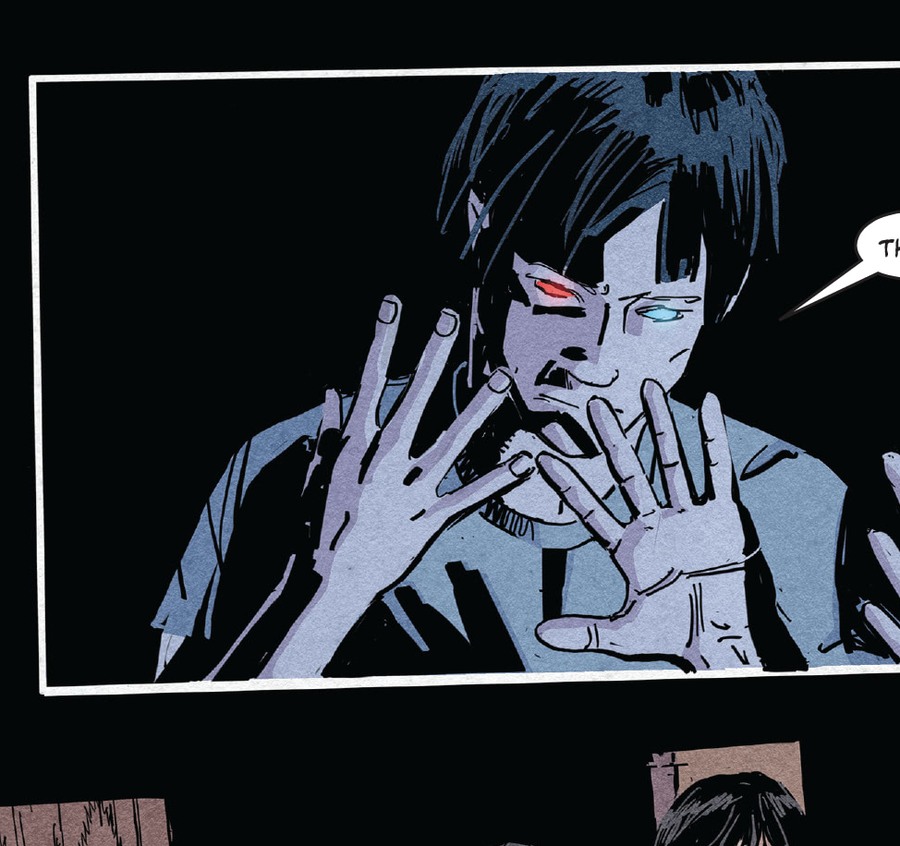
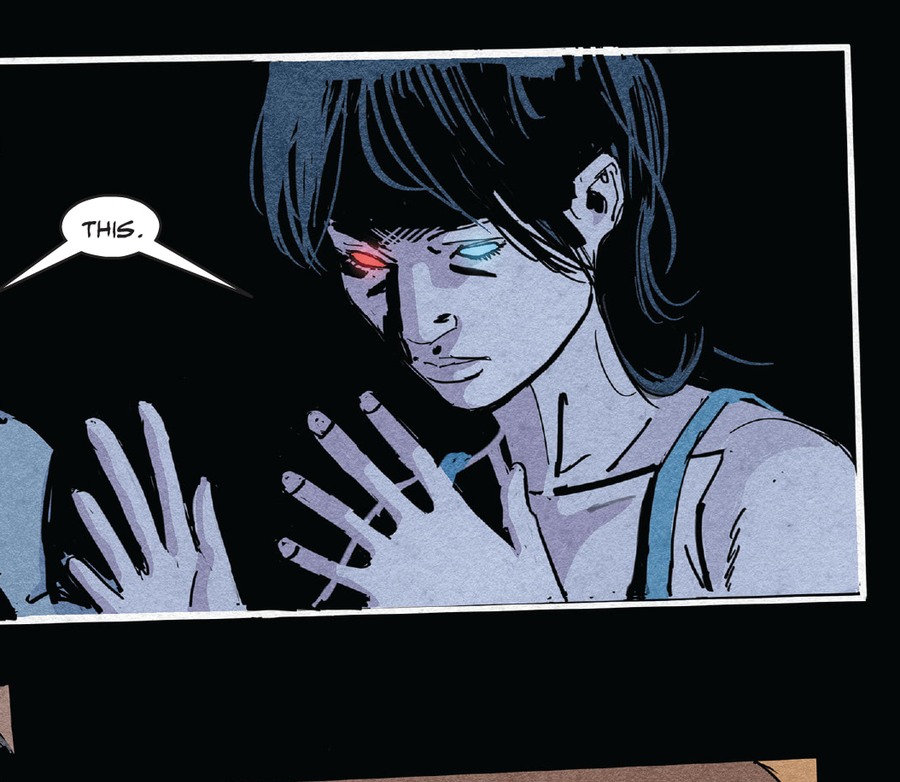
Spoilers: This article covers B and Diana's children in BRZRKR #12 and the inherited biology surrounding B.
Inherited abilities are the signs that B's condition does not end with B. The final issue shows B and Diana's children developing with unusual speed and displaying physical traits that connect them to the same extraordinary history. The comic does not present a complete genetic explanation. Instead, it asks what it means for a family to inherit a power that has always been used by institutions as a weapon.
Inheritance begins with a person
B spends most of his life being described as a phenomenon before he is allowed to be a son, lover, or father. His mother and father argue over what his changed body means. Kings and governments repeat the argument in political language. By the time Diana becomes pregnant, B understands the danger of giving another life the same burden. The children are therefore not a laboratory extension of the government program. They are a family whose future has to be considered before the ability is measured.
Diana's presence changes the meaning of inheritance. B's altered biology is one line of the children's history; Diana contributes the human relationship in which they are raised. Their bodies may reflect the Source-linked condition, but their identities will be shaped by care, memory, and the choices available to them. The story refuses to make biology destiny.
What the final issue shows
The children are born after the mortality sequence has changed B and Diana's circumstances. Their development is accelerated, and the panels emphasize how quickly a newborn becomes able to move through the world. Their eyes display red-and-blue coloration associated with the inherited condition. The images are striking because they show a new generation without making the children miniature versions of B.
The comic does not enumerate every ability. It establishes unusual growth and visual inheritance, then leaves the future open. The children may share regenerative qualities, Source contact, or other changes, but the issue does not confirm a complete list. Their first appearance is a promise and a problem rather than a finished power set.
Biology and choice
Inherited abilities create a different ethical question from artificial immortality. Franken-B is made through a deliberate process conducted by institutions. B and Diana's children are conceived in a relationship, yet their bodies still carry consequences neither child could choose. The distinction does not remove responsibility. Parents and protectors must decide whether to hide the children, teach them, or allow other people to define them.
B knows what it means to be trained before understanding the purpose of training. He also knows that every regime will want to claim an extraordinary body. His decision to leave the children with a future outside the government's immediate control is therefore a rejection of his own childhood. He cannot guarantee that history will leave them alone, but he can refuse to hand them over.
Relationship to the Source
The children's abilities appear after the series has connected B's body to the Source or Pollinator. The timing suggests that the cosmic system remains relevant to inheritance, but the comic does not say whether the Source directly selects the children. They are not presented as chosen emissaries or as a replacement for B. The most careful reading is that B's altered biology and the conditions of conception have consequences in the next generation.
The distinction protects the children's humanity. If the Source authored every trait with a fixed purpose, the children would begin as instruments. The issue instead gives them faces, movement, and a family before it gives them a mission. Their potential is real; their destiny is not predetermined.
Memory and family history
Inheritance is not only biological. B carries a perfect memory of people who are no longer alive, but his children will grow up with a history they did not experience. What he tells them, what Diana tells them, and what remains hidden will shape their understanding of their bodies. A family secret can protect a child for a time and isolate the child later.
The children may also inherit stories from the wider world. Governments can describe B as a weapon. Cults can describe him as a sacred ancestor. Historical communities have turned him into a guardian, prisoner, or monster. Each account offers a different identity. The parents' work is to make sure the children encounter those stories as history rather than as orders.
The possibility of regeneration
The issue leaves the most important biological question unresolved: do the children regenerate as B does? Their accelerated maturation and eye coloration suggest a connection, but neither trait is identical to healing from catastrophic injury. A fast-developing body could have different limits, different costs, or no regenerative ability at all.
That uncertainty is dramatically useful. B's body has been the measure by which every institution judges him. The children might exceed it, diverge from it, or live with a mixture of ordinary and extraordinary traits. Their future does not need to repeat B's eighty thousand years. The series can explore inheritance as variation rather than duplication.
Why the children leave
The children depart the safehouse after the violence of the final arc. Their leaving is not a defeat for the parents. It is the first act of protection that acknowledges children need a life beyond a single room and beyond B's shadow. The departure also creates a new kind of separation. B cannot follow forever, and Diana cannot eliminate every danger. The family must trust that survival can include distance.
The moment echoes B's own history while reversing it. He was taken from ordinary childhood and directed toward war. The children leave an extraordinary childhood with the possibility of choosing their own direction. The risk remains, but the direction of the story has changed from possession to freedom.
Open questions
The comic does not name the children, state their final abilities, or reveal where they go after leaving. It does not explain whether their eye colors remain, whether they age at a human rate after the initial acceleration, or how the Source regards them. It also leaves open whether other descendants will inherit the same traits.
Those questions should remain attached to the children as characters rather than treated as a technical checklist. Every answer will affect their relationships, not merely their combat potential. The series' deepest concern is whether a new generation can be spared the old demand to be useful.
Significance
Inherited abilities turn the ending into a beginning. B's body has been a prison, a weapon, and a mystery; in the children it becomes a family inheritance that might be interpreted differently. Their existence proves that B's story has consequences beyond his own survival, but it does not require those consequences to become another cycle of exploitation.
The children matter because they make the future personal. The question is no longer only how B can die. It is whether the people he loves can live without being claimed by the explanations that followed him for eighty thousand years.
[1] Reeves, Kindt, Garney, Crabtree, and Robins, BRZRKR #12, pregnancy, birth, accelerated development, eye coloration, and departure.
[2] Reeves, Kindt, Garney, Crabtree, and Robins, BRZRKR #2-4 and #11-12, B's origin, Source contact, and inherited consequences.