Selected scenes
BRZRKR in pictures.
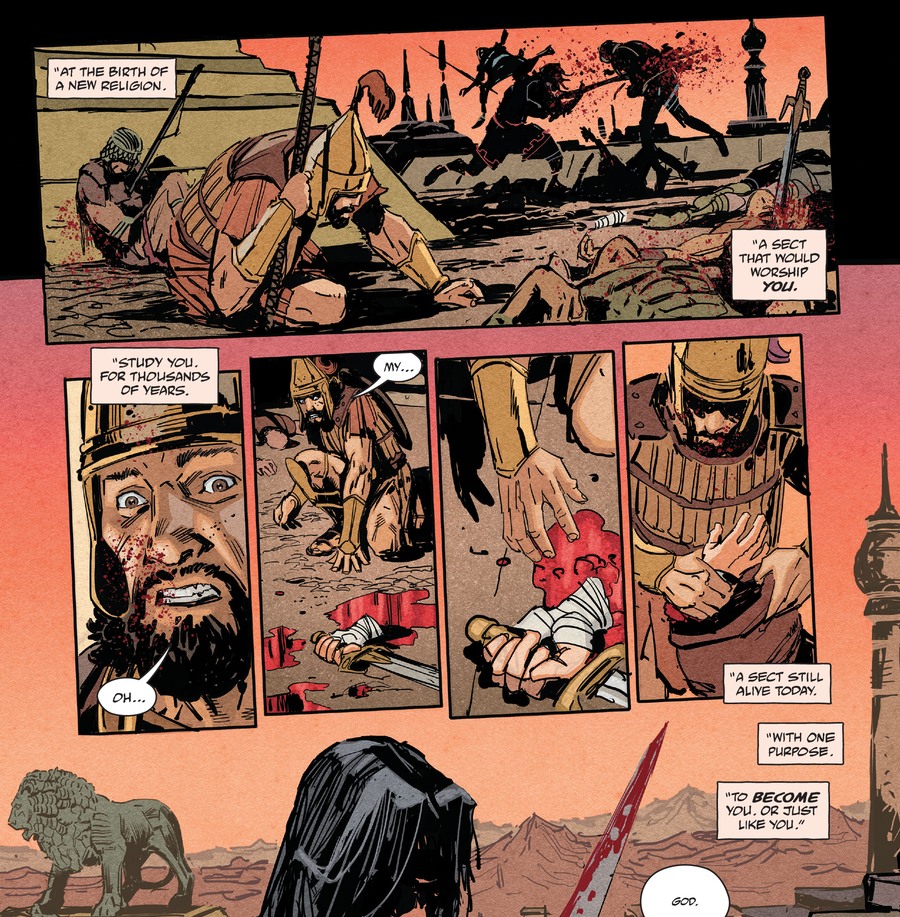
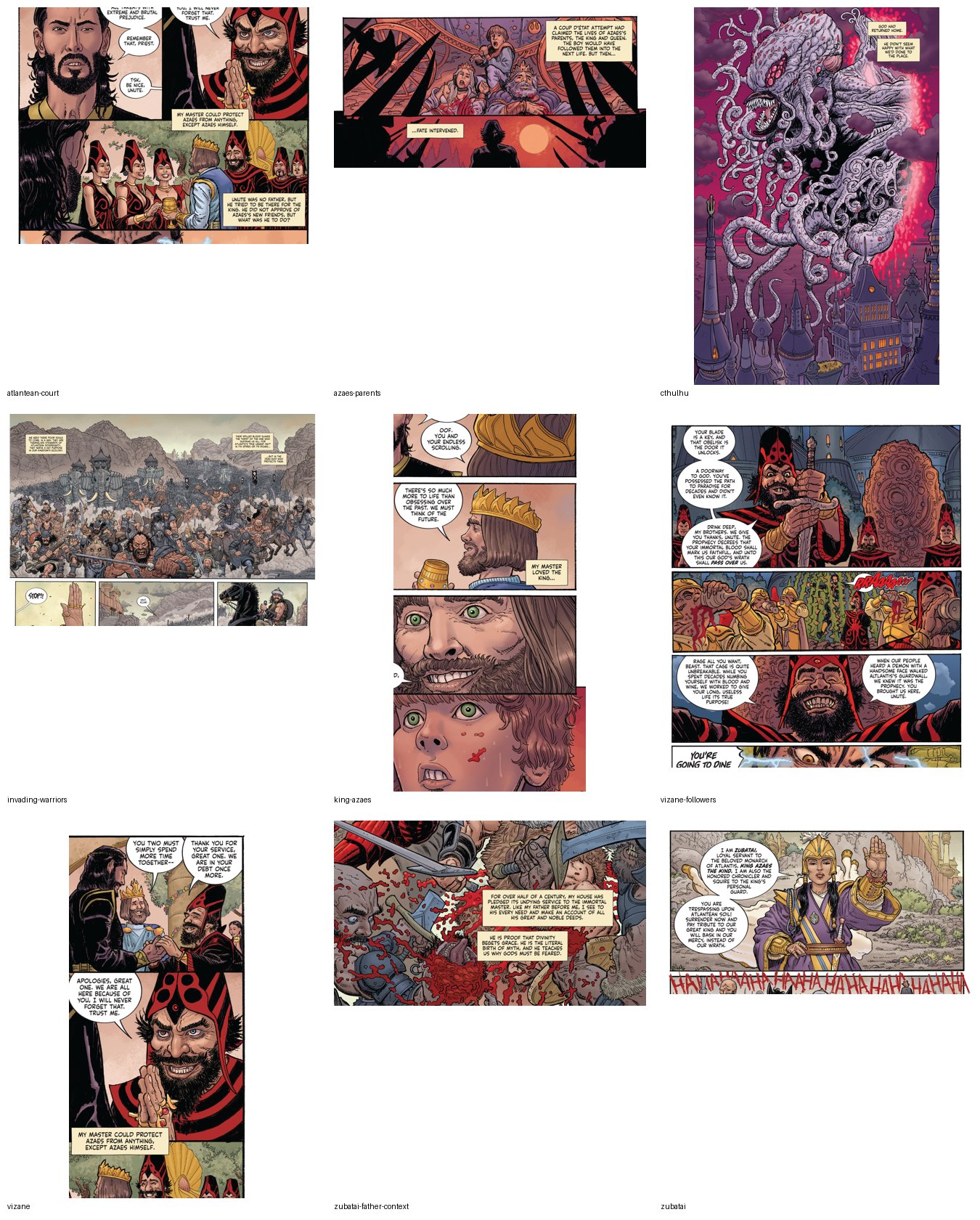
Spoilers: This article covers the cult's recurring pursuit of B's condition across BRZRKR's historical and modern branches.
Cult immortality through time is the recurring belief that B's body offers a route to escaping ordinary death. The idea appears in different eras and under different names, but its structure remains recognizable. A group encounters evidence of B, preserves the evidence, and turns the evidence into a promise that its members can control. The cult's history is therefore not a single unchanged religion. It is a sequence of human attempts to make B's survival serve a doctrine.
From miracle to method
The first communities around B can call his survival a miracle or a gift. The language becomes more organized when people begin to preserve the story and search for a way to reproduce it. A title becomes a ritual. A relic becomes proof. A fragment becomes a potential ingredient. The cult's pursuit begins when interpretation turns into method.
The method changes with each era. Atlantis uses prophecy, Aklo, and a gateway. Late-antique alchemists use substances and apparatus. Medieval and imperial networks use political access and military power. Caldwell's modern lineage uses laboratories, contracts, and Source-linked machines. The tools differ because the institutions differ, but the goal is to escape the limits that B cannot escape for them.
Why B becomes the center
B is useful to the cult because he is both evidence and person. His body proves that extraordinary survival exists, while his long life provides a living connection to forgotten eras. If the cult can own B, it can claim that its doctrine has direct access to history. If it can reproduce him, it can turn a unique exception into a social advantage.
The desire is never purely medical. Immortality promises authority, continuity, and freedom from the fear that makes ordinary politics unstable. A ruler can preserve a kingdom, a priest can validate a prophecy, and a scientist can complete a theory. B's body becomes valuable because each institution imagines what it could accomplish if death no longer limited its leaders.
The cult's material chain
The pursuit travels through objects: B's blood, separated tissue, Mother's Gift, tablets, tattoos, Aklo texts, and artifacts recovered from historical sites. Material evidence feels secure because it can be held and moved. Yet an object does not preserve its meaning automatically. A later member may possess the relic without understanding the warning that accompanied it.
Caldwell's lineage is built from that incomplete chain. He inherits records and symbols while adding modern research. The cult's apparent continuity is therefore partly a continuity of desire. A group may not share every ritual or belief and still recognize B as the same opportunity.
Religion, science, and secrecy
Cult immortality can use religious language and scientific language without choosing between them. Vizane calls the gateway a sacred destiny. Caldwell calls his work research. Both seek to make an extraordinary body answer a human demand. The difference is style and institutional cover.
Secrecy allows the pursuit to cross those categories. A hidden group can work inside a government program, a royal court, or a laboratory while presenting itself differently to each audience. The secret is not only that B exists. It is that the people studying him have another purpose beyond the one they publicly describe.
The cost of the promise
The cult's promise of immortality creates victims before it creates success. People are sacrificed, tested, imprisoned, or turned into material. Atlantis is destroyed by a ritual that claims to elevate its followers. B's tissue becomes a resource for Franken-B. A derived being is created without consent. The promise fails morally even when the mechanism works.
The cost also falls on believers. A person who gives everything to a doctrine may discover that the promised god or method cannot protect them from the consequences. Vizane expects Cthulhu to recognize his service. Caldwell expects knowledge to produce control. Both misread the power they want to possess.
B's refusal
B rejects cult immortality because he knows what the promise hides. He does not want a longer life at any price. He wants an end to pain, compulsion, and the repeated demand that his body serve a stranger's purpose. When he refuses a ritual, leaves an empire, or releases Lugalṭur, he is refusing the cult's definition of salvation.
His resistance is not a rejection of every spiritual question. B still wants to know why he was created and what the Source is. He rejects the claim that unanswered questions authorize other people to own him. Curiosity remains possible without surrender.
The modern climax
The final program combines cult history with government science. Caldwell's obsession, separated fragments, the hypercomputer, Protocol X, and the Source contact converge. The research can alter B's condition, but it cannot deliver the clean immortality the cult imagines. Caldwell receives the burden of regeneration and violence rather than a painless godhood.
The transfer exposes the cult's central error. Immortality is not an empty benefit that can be handed to a new owner. It contains pain, memory, compulsion, and responsibility. A person who wants the power without the history receives a different kind of prison.
Open questions
The comic does not identify every historical cult member, the exact beginning of the lineage, or the full structure of surviving groups. It does not prove that every ancient story about B comes from one organization. The strongest through-line is the repeated attempt to preserve and exploit knowledge of his condition.
Significance
Cult immortality through time is BRZRKR's portrait of desire becoming institution. People see B survive and decide that survival should belong to them. The cult's history matters because it shows that the most dangerous threat to B is not a single villain. It is the recurring human belief that an extraordinary life can be converted into a right to rule, reproduce, or live forever.
[1] Reeves, Kindt, Garney, Crabtree, and Robins, BRZRKR #1-12 and the historical one-shots, cult lineage, B's relics, artificial immortality, Atlantis, alchemy, and Caldwell's program.