Selected scenes
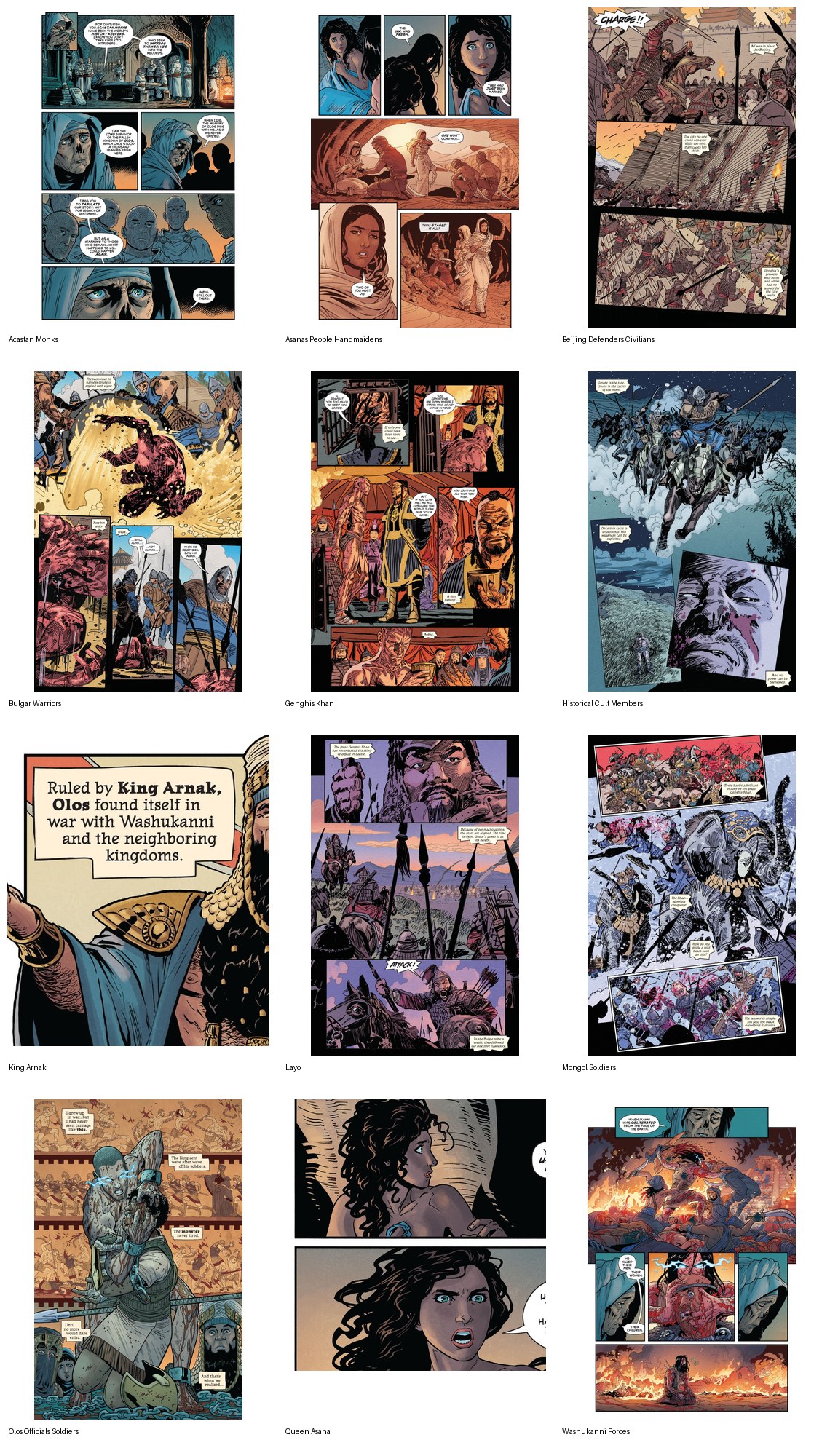
BRZRKR in pictures.
Spoilers: This article covers the maritime journey in BRZRKR: The Bleeding Tide #1.
The Socotra route is the maritime passage connecting the Captain's ship, B's ocean recovery, and the supernatural conflict surrounding the Sorceress. It is less a single road than a chain of sea movements through which the characters carry bodies, stories, and inherited danger. The route gives The Bleeding Tide its sense of distance while keeping the conflict intimate: every mile crossed by the ship brings the crew closer to a stronghold whose history is tied to their own.
A route shaped by secrecy
Ships travel through places that governments and armies cannot watch continuously. The Socotra route allows the Captain's crew to move outside the modern program's control and outside the public histories attached to B. That freedom is temporary. A maritime community can hide a person, but it cannot make the person's past disappear.
The route also carries information. Crew members know fragments of the Captain's history, the Sorceress's power, and the danger represented by B. Each stop can add a witness or create a new threat. The journey is therefore a movement through competing versions of the truth rather than a simple passage between coordinates.
B aboard the ship
B's presence changes the route's purpose. The Captain is no longer moving only with her crew and inherited conflict. She is carrying a survivor whose body raises questions about another form of immortality. B can fight, heal, and remember, but he cannot explain the ship's customs immediately. The route forces him to listen before he acts.
That restraint is unusual for B. On a battlefield he can decide the outcome through force. At sea, his decisions affect a small community that cannot replace a lost crew member easily. The ship makes the consequences of violence immediate. B's presence may save the vessel in one moment and endanger it in the next.
Ports and the ocean recovery
The recovery site and the Socotra route are connected by the fact that the sea supplies both movement and concealment. B is found without a clear chain of custody. The crew's journey then becomes the chain through which his next identity is formed. A person who has been an asset, prisoner, or legend becomes a passenger whose future depends on the Captain's decisions.
The route's geography remains approximate in the story. The names anchor the branch in the real ocean world without turning it into a travel guide. What matters is the transition from open water to a destination controlled by supernatural family history.
The approach to the stronghold
The route narrows as the Captain's ship approaches the Sorceress's stronghold. The sea remains open, but the conflict becomes less avoidable. The stronghold represents inherited authority made physical: a place where idols, ritual spaces, and summoned beings protect one family's claim to power.
B's arrival threatens that claim because he does not share the Captain's history and cannot be absorbed easily into the Sorceress's mythology. The route creates a suspense built from approach. The crew knows that reaching the destination may reveal answers while also making escape harder.
The politics of a moving home
A ship is a community that carries its own law. The Captain decides who boards, who commands, and what risks are acceptable. The route exposes the political cost of that arrangement. A crew member who questions the Captain cannot simply leave at the next street. Trust has to be negotiated inside a moving, isolated environment.
This structure echoes earlier BRZRKR communities. B's prehistoric tribe, Atlantis, Olos, the Mongol army, and the government program all offer belonging through service. The ship offers belonging through loyalty and shared danger. The difference lies in scale, not in the underlying question of whether B can remain a person inside an institution.
Blood, weather, and memory
The maritime branch uses the physical environment to echo its themes. Blood disperses in water, storms erase visibility, and routes depend on knowledge that can be lost. B's memories are unusually stable, but the people around him remember through stories that change as they are retold. The route becomes a test of which details survive the journey.
The sea also connects the branch to B's long life. He has crossed deserts, battlefields, and empires; now he moves through an environment where the horizon offers no fixed landmark. The route gives him a different kind of historical anonymity. He is not a king's champion or a government operative. He is a body aboard a ship, waiting to see which story the crew will choose.
Open questions
The one-shot does not name every stop, give exact dates, or establish whether the route has a fixed supernatural property. It does not reveal the complete history of the Captain's voyages or the precise relationship between Socotra and the Sorceress's stronghold. The geography remains part of the branch's mystery.
Significance
The Socotra route matters because it turns travel into a moral test. B is carried away from the systems that previously claimed him, but the ship creates new obligations. The route can offer rescue, secrecy, and a path toward answers; it can also carry B into another family's struggle over blood and power. BRZRKR uses the sea to show that freedom is not the absence of community. It is the chance to choose what one owes the people sharing the voyage.
The route also gives the crew a way to measure B's character without relying on his reputation. A person who has heard the stories can call him a berserker, a storm, or a threat. A person who shares a deck with him watches smaller decisions: whether he takes the first watch, whether he protects a weaker passenger, whether he leaves a crewmate behind when escape would be easier. The sea turns those choices into the evidence that matters.
Those small decisions are especially important because the route offers no neutral witness. A port authority would record a ship's arrival, but the crucial events happen between ports, where the crew's account is the only surviving account. If the Captain protects B, the act becomes part of her legend; if she betrays him, the same route can be remembered as a trap. The geography is uncertain, but the emotional consequences are not.
[1] Official publication material for BRZRKR: The Bleeding Tide #1, Socotra route, Captain's ship, B's recovery, Myu, and the Sorceress's stronghold.