Selected scenes
BRZRKR in pictures.
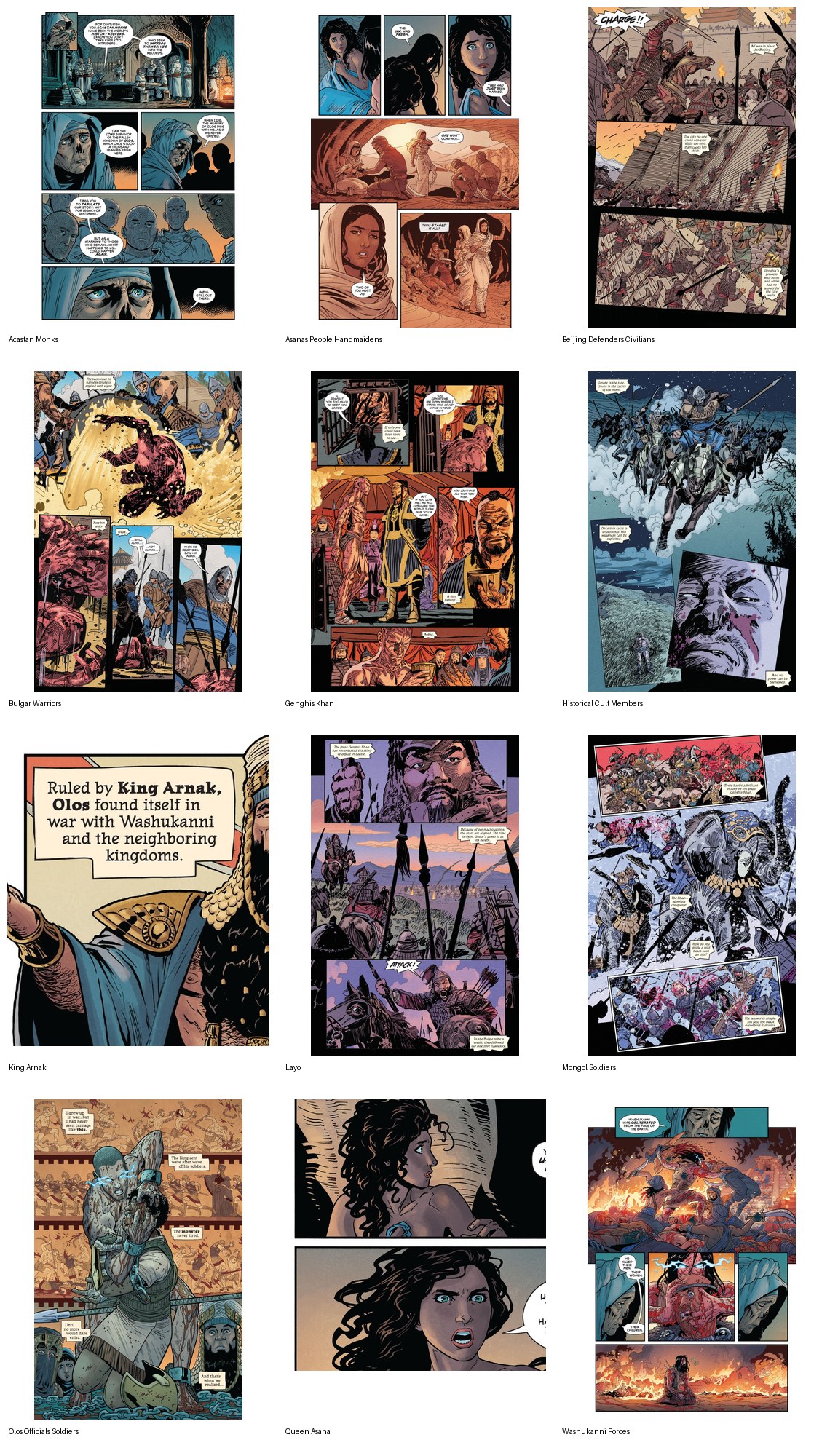
Spoilers: This article covers B's captivity and relationship with Asana in BRZRKR: Fallen Empire #1.
Olos Palace is the center of the political system that captures B and turns his presence into a royal resource. It is a place of ceremony, private conversation, command, and surveillance. The palace allows King Arnak and his officials to present ownership as civilization. B may be restrained in a prison or displayed in an arena, but the palace supplies the language that makes those acts appear legitimate.
A court built around possession
Olos does not treat B as an ordinary prisoner. His body is too valuable to kill and too powerful to leave uncontrolled. The palace therefore develops a system that combines restraints, officials, soldiers, and spectacle. B is contained not only by chains or walls but by the assumption that the kingdom has a right to decide where he belongs.
This is different from the open battlefield. An army can capture B through force. A court must create a story about the capture. The palace calls him a strategic possession, a wonder, or a protector while denying that he can choose his own departure. The political story is part of the prison.
King Arnak's authority
King Arnak represents the palace's institutional logic. He does not need to understand the Source or B's full history to see military value. A ruler can recognize that a warrior who survives every injury changes the balance of power. Arnak's decisions place B inside the kingdom's hierarchy and make the captive useful to the state.
The one-shot does not provide a complete account of Arnak's life or every order he gives. What it shows is enough to define the relationship. The king's authority is expressed through the palace, the prison, and the arena. B's body becomes part of the kingdom's public image, and the court benefits from that image even when the private cost remains hidden.
Asana's position
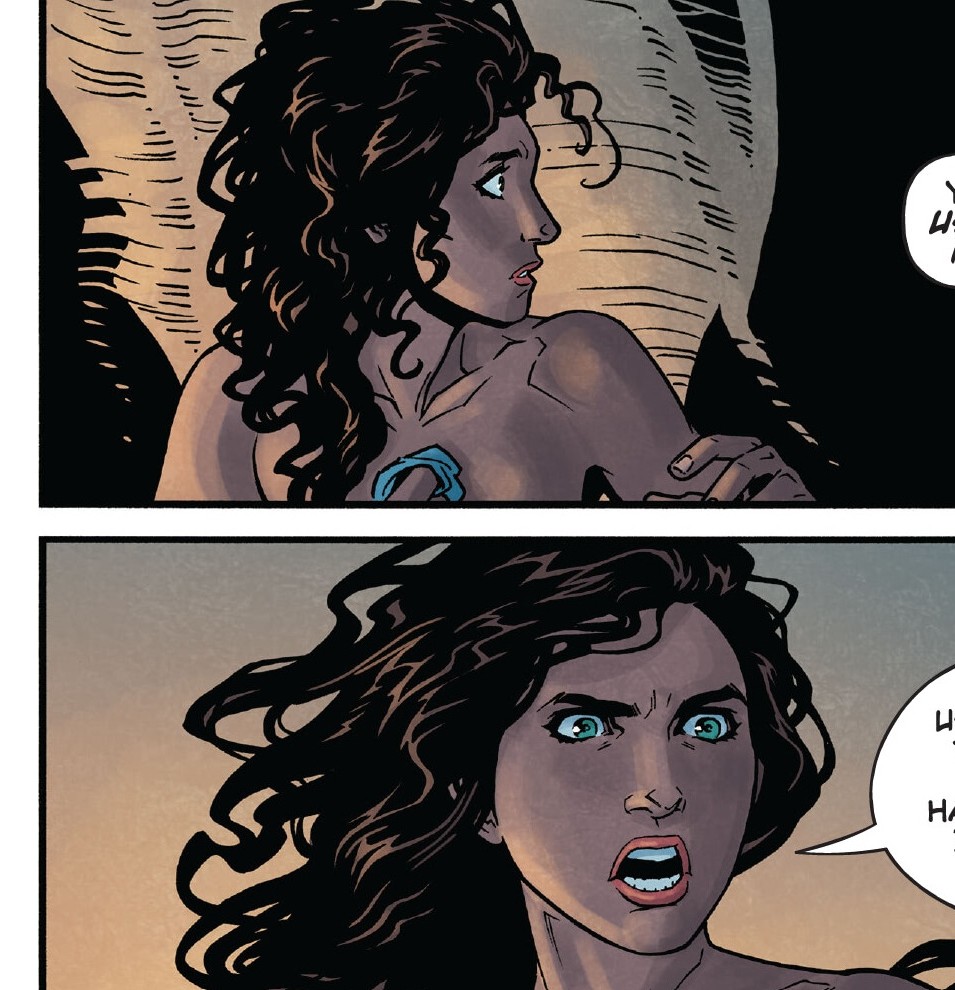
Asana moves through the palace differently. She has access to its power but also sees the person within the spectacle. Her relationship with B develops in the same environment that holds him captive, which means intimacy cannot be separated from politics. She can understand that B is not an animal while still benefiting from the court's decision to keep him.
That contradiction gives the palace its emotional center. Asana's affection does not unlock the restraints or dissolve Arnak's authority. A private relationship can offer B recognition without granting him freedom. The story refuses to use romance as an easy escape from the political system that created the situation.
Palace, prison, and arena
The palace is linked to two other spaces: the prison where B is physically contained and the arena where his strength can be displayed. Together they form a sequence of control. The prison hides the captive, the arena turns him into entertainment or proof, and the palace decides when each version is useful.
The movement among these spaces exposes how Olos treats a person as an object that can be placed according to the audience. B's body remains the same, but the meaning changes with the room. A ruler sees a resource, soldiers see a threat, spectators see a spectacle, and Asana sees a man. None of those views alone can release him.
War beyond the walls
Olos Palace is not isolated from the conflict with Washukanni and the surrounding forces. The kingdom's military needs make B's captivity appear necessary. A court under threat can claim that extraordinary measures are temporary. The danger outside becomes the justification for permanent control inside.
The destruction of Olos exposes the failure of that argument. Possessing B does not save the kingdom. The palace, like every institution that claims him, can command his movement for a time but cannot control the consequences of the wider war. A ruler may own the room in which B is held; history does not belong to the ruler.
A place of confession
The palace also creates a setting for confession. Asana and B speak across the distance between public role and private knowledge. Their conversations reveal what the restraints cannot: B remembers a life beyond Olos, and Asana understands that the court's account of him is incomplete. The palace produces intimacy because control forces people into proximity, but the intimacy remains morally unstable.
Asana's death and the destruction of the political order make the confession part of the city's legacy. The palace can preserve a royal version of events, but it cannot preserve the people who challenged that version. B carries the memory forward, while Olos becomes another place remembered through loss.
The architecture of a recurring pattern
Olos anticipates the modern government program. Both systems provide resources, rules, and a stated purpose for keeping B close. Both call the arrangement necessary. The difference is the vocabulary: the palace uses kingship and spectacle; the program uses contracts, science, and national security. The underlying pressure is the same. B is valued because his body can be made useful to someone else.
The comparison does not make the settings identical. Olos is an ancient kingdom with its own people and politics. The government is a modern institution with different tools and responsibilities. Their parallel matters because it shows that weaponization is not a single historical accident. It is a recurring response to a person who cannot be easily killed.
Open questions
The story leaves the exact layout of the palace, Arnak's full family history, the number of prisoners, and the final fate of every court member uncertain. It also does not identify the palace with a confirmed real-world site. Olos belongs to the one-shot's historical imagination, where political details are vivid even when chronology and geography remain approximate.
Significance
Olos Palace is a place where captivity wears the clothes of civilization. Its rooms make possession look orderly, its ceremonies make violence look official, and its relationship with Asana shows that recognition can exist inside an unjust system. The palace matters because B's escape from it is not only a physical event. It is the moment when the kingdom's claim to define him begins to fail.
[1] Reeves, Kindt, Garney, Crabtree, and Robins, BRZRKR: Fallen Empire #1, Olos palace, King Arnak, Asana, B's captivity, prison, arena, and destruction of the kingdom.