Selected scenes
BRZRKR in pictures.
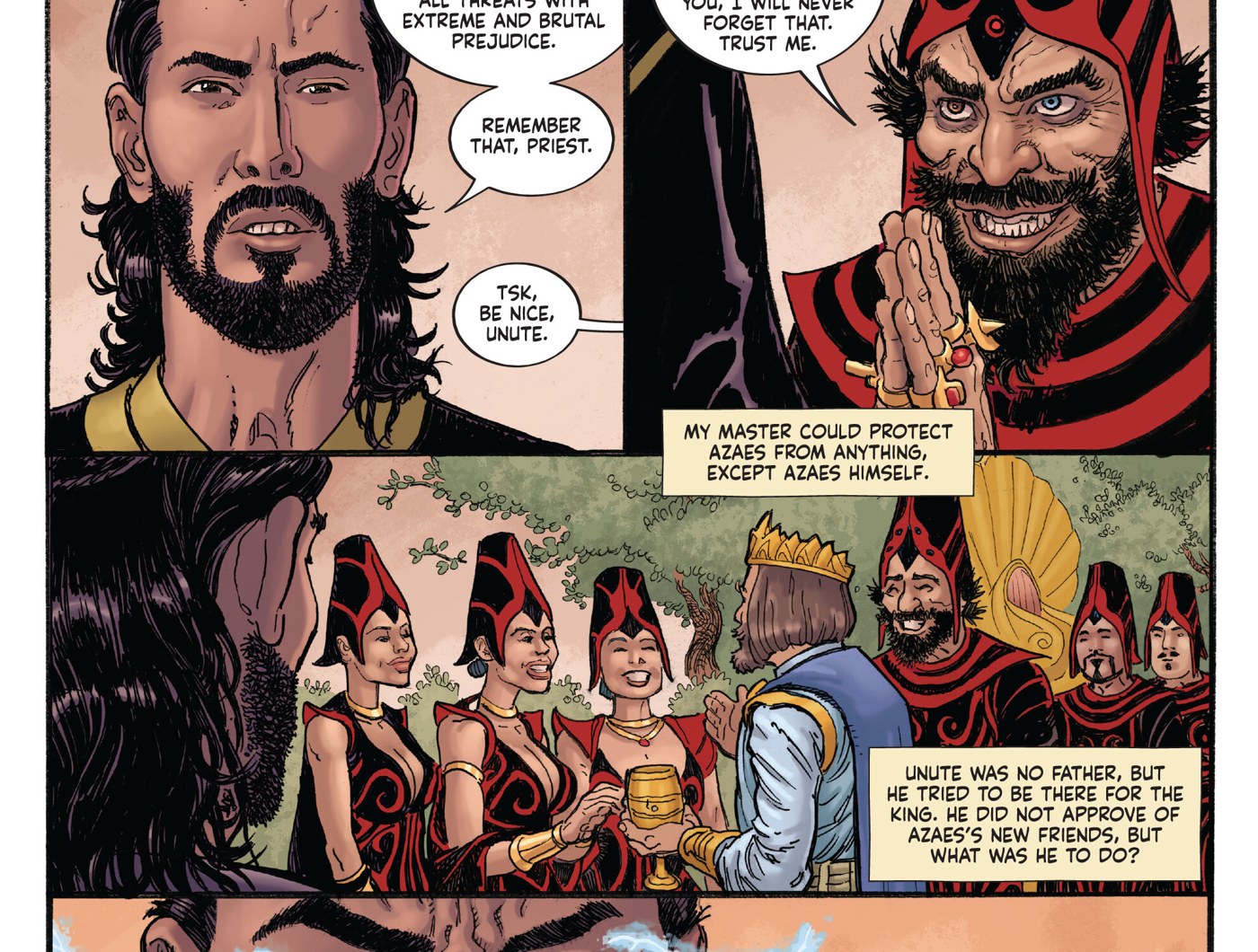
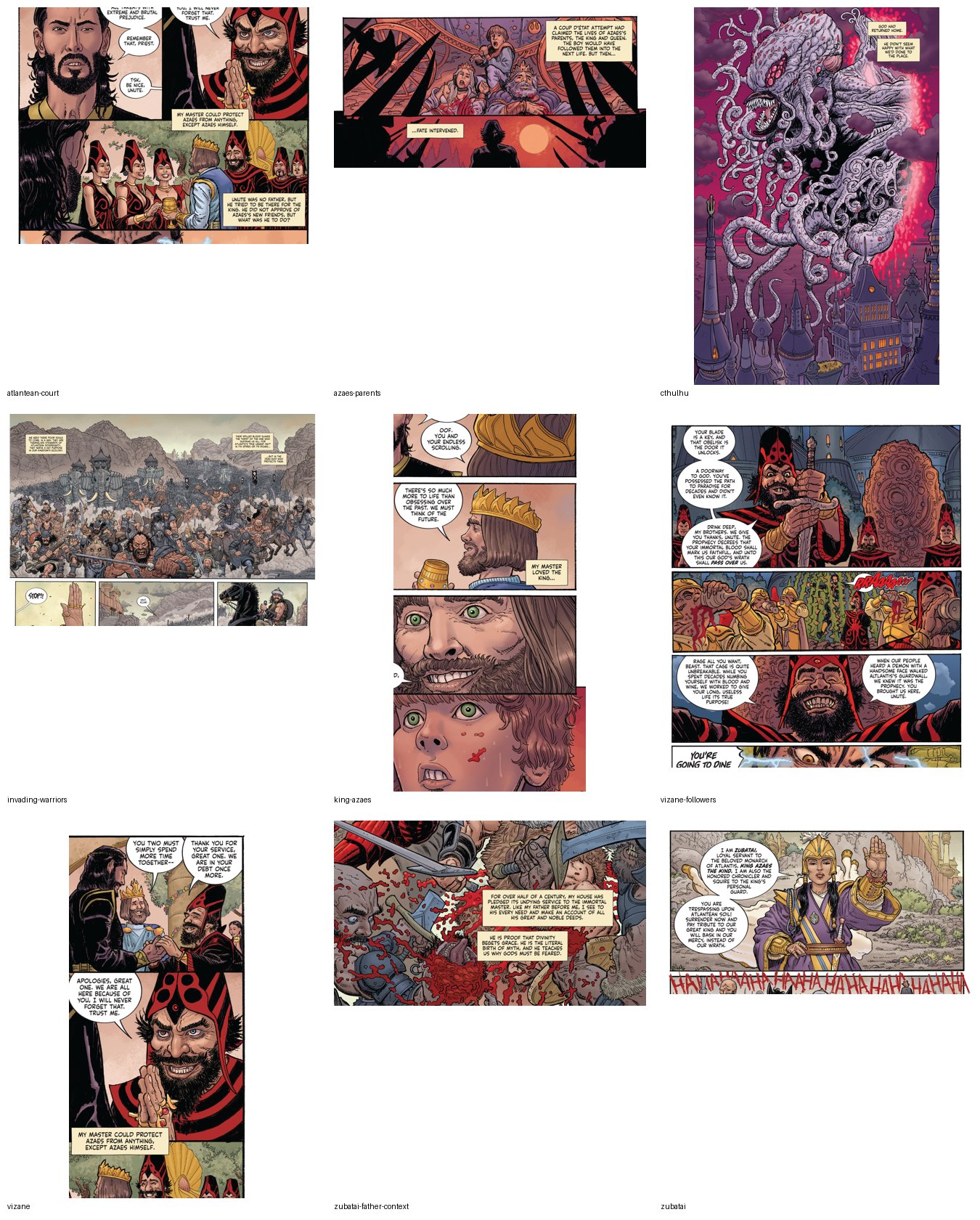
Spoilers: This article covers the Atlantis material in BRZRKR: Poetry of Madness #1.
The Atlantean reliquary is the guarded collection where B keeps dangerous objects and writings during his years as a protector of Atlantis. It is not a decorative treasure room. The reliquary is a place built around the idea that some knowledge must be preserved without being used. When Vizane's followers rob it, the theft supplies the material that destroys the city. The location therefore embodies the central tension of the Atlantis story: protection can become possession, and preservation can fail when a court decides that forbidden knowledge is worth the risk.
B's reason for guarding it
B has lived long enough to recognize patterns that younger civilizations mistake for discoveries. He knows that the Aklo texts are dangerous and that objects associated with them should not circulate freely. The reliquary gives him a place to keep such material away from ordinary political ambition. His role is unusual. He is both a member of the Atlantean court and a custodian who does not fully belong to it.
That distance explains why B's protection is not the same as the monarchy's ownership. He can defend the city and still distrust its leaders. He can admire Azaes and still refuse to let the king turn every mystery into a state project. The reliquary is one of the few spaces where B's long memory gives him authority based on experience rather than title.
What the collection contains
The one-shot identifies the stolen material as a large obelisk and dangerous ancient writings in Aklo. The collection also holds ritual objects and other items whose complete history is not explained. The objects matter together. The obelisk, B's blood, the primordial-ore sword, the texts, and the ritual vessels later form a gateway system in the northeastern tower.
The reliquary does not function as a machine waiting for a single missing switch. Its objects have different histories, and the issue does not identify the maker of each one. B's decision to store them together may reflect a practical judgment that the combination is dangerous, not a belief that they were designed as one set. Vizane's theft creates the combination that the city's guardians had tried to prevent.
The robbery
Zubatai discovers that the reliquary has been robbed and reports the loss to B. The scene changes the atmosphere of Atlantis. The threat is no longer an invading army outside the walls. It is an internal conspiracy with access to the palace and a reason to interpret B's history as prophecy. The stolen objects give Vizane a way to transform private belief into public catastrophe.
B understands the danger before the court does. He recognizes Aklo and realizes that the thieves are not searching for wealth. They want to resurrect beings they call gods. Azaes has already been drawn toward the movement, which makes the theft a family and political crisis as well as a supernatural one.
From archive to gateway
The stolen material is carried to the northeastern tower, where Vizane's followers prepare a ritual. The reliquary's protective purpose is reversed. Objects that were separated and guarded are assembled under the pressure of prophecy. B's blood becomes an ingredient, not because B consents, but because the ritual treats his body as a key.
The gateway opens. Cthulhu arrives, and the city discovers that a successful ritual is not the same as a controlled one. B fights the entity and kills it, but the dying body dissolves Atlantis. The reliquary's failure is therefore not that it contained false information. The objects work. The catastrophe comes from the belief that working mechanisms can be safely owned.
The court around the reliquary
The location is connected to Azaes, Zubatai, Vizane, guards, courtiers, and followers. Each person gives it a different meaning. Azaes sees the promise of a destiny larger than mortality. Zubatai sees a practical emergency and reports what has happened. Vizane sees a storehouse of evidence for his religious program. B sees a boundary that the court has allowed to be crossed.
The reliquary also reveals how close protection and surveillance can be. A guarded collection requires people to watch entrances, record movement, and decide who is trustworthy. The same social system that keeps dangerous objects hidden can allow a favored priest to approach them. The theft is possible because the palace has already confused political access with moral judgment.
Knowledge and responsibility
The reliquary's ethical importance extends beyond Atlantis. B later encounters governments and cults that want to study or reproduce the conditions of his body. The location is an early example of his attempt to keep knowledge from becoming a weapon. He does not destroy every dangerous object; he tries to place it where its context and risk can be remembered.
Vizane's movement removes context. The priest treats the texts as a promise and the obelisk as a tool. He does not need to understand the history of each item because he believes the prophecy has already assigned the objects a purpose. The tragedy begins when interpretation outruns responsibility.
The city's memory after the fall
Once Atlantis dissolves, the reliquary cannot be revisited as an ordinary place. Its contents are scattered, destroyed, or absorbed into legend. The surviving account comes through Zubatai's record and the scenes of the catastrophe. Later readers know that B guarded forbidden material, but they cannot reconstruct every shelf, inscription, or chain of custody.
That loss is part of the location's meaning. A city can preserve knowledge for centuries and still lose it in one night. The catastrophe does not prove that preservation is futile. It shows that preservation depends on institutions whose members must choose restraint repeatedly. The reliquary fails when one political movement decides that desire is a better guide than caution.
Open questions
The one-shot does not name the reliquary's builders, give its complete contents, or explain how B acquired every object. It does not establish whether the surviving fragments of the collection reached other eras, or whether the obelisk was unique. The real-world identity of Atlantis also remains within the story's mythic continuity rather than being mapped to a confirmed historical site.
Significance
The Atlantean reliquary is the quiet center of Poetry of Madness. The harbor and palace show Atlantis as a living city; the tower shows the moment of catastrophe; the reliquary explains how the catastrophe became possible. B's effort to keep dangerous knowledge contained fails, but the failure does not make his judgment wrong. It makes the cost of ignoring it visible.
[1] Reeves and the creative team of BRZRKR: Poetry of Madness #1, B's reliquary, Aklo texts, obelisk, robbery, gateway, and fall of Atlantis.