Selected scenes
BRZRKR in pictures.
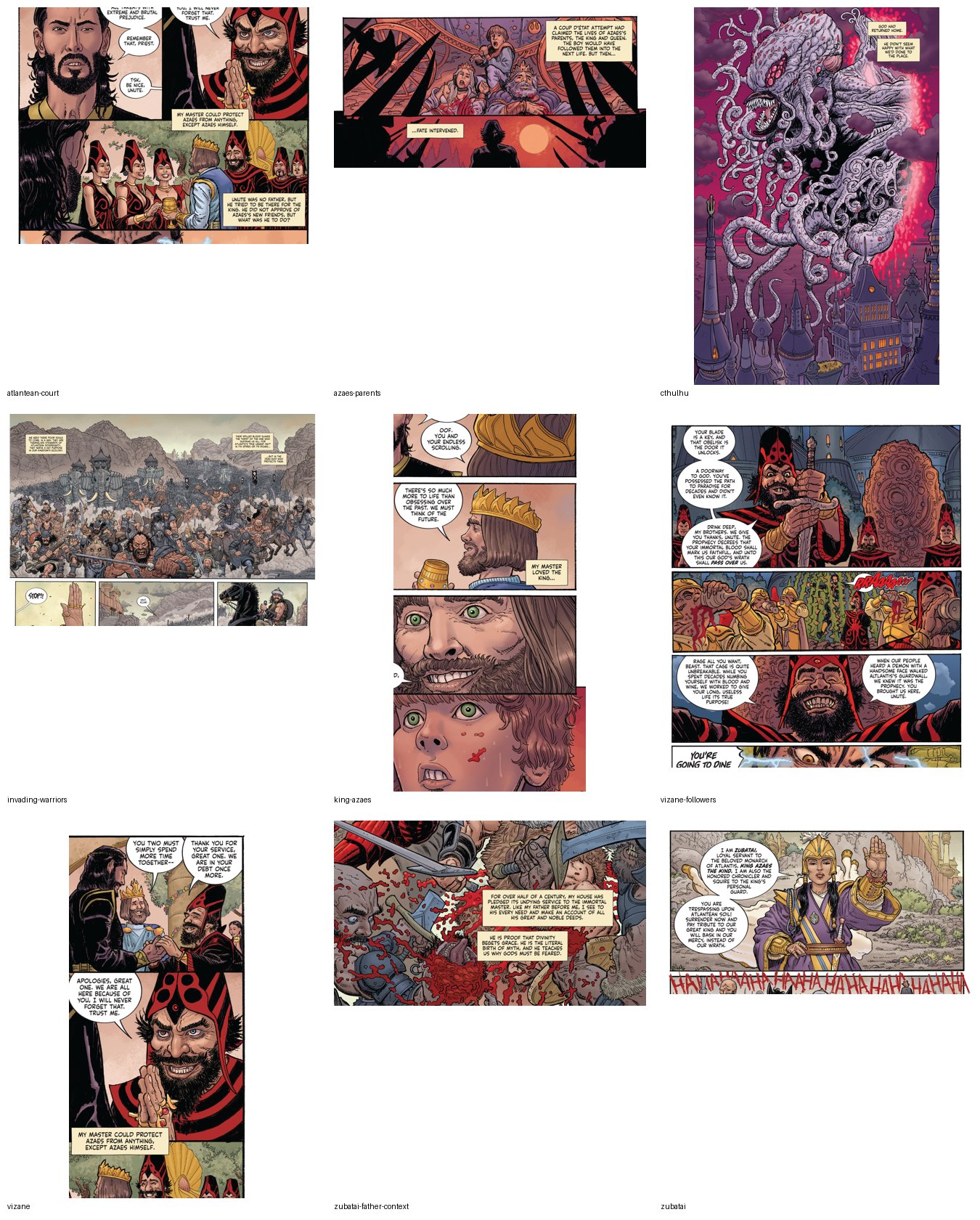
Spoilers: This article covers the harbor scenes and the destruction of Atlantis in BRZRKR: Poetry of Madness #1.
The Atlantean harbor is the public face of the city in Poetry of Madness. Ships, travelers, guards, and citizens connect Atlantis to the wider sea, while the palace and reliquary concentrate the city's political and religious power inland. The harbor makes Atlantis feel open and prosperous, which sharpens the shock of its destruction. A city that appears protected by wealth and walls can still be undone by a ritual prepared inside its own court.
A city connected to the world
The harbor gives Atlantis movement. Goods arrive, people leave, and news can cross the water before a ruler has decided how to respond. B's role as protector includes the city's public spaces, not only the palace. He is associated with a community that believes it can project power across the sea and remain secure at home.
The one-shot does not provide a complete map or a fixed historical date. The harbor is a narrative location first. It establishes maritime scale and a sense of exposure. Invaders can approach by water, and the city's own ships make it possible for ideas and cults to circulate. The same openness that brings prosperity also allows dangerous knowledge to move toward the court.
B as protector
B's relationship with Atlantis is often remembered through royal history, but the harbor shows the practical side of that role. He is not merely a symbol beside King Azaes. He is the person expected to answer when violence threatens the city's people. The harbor's crowds make the promise of protection visible: a defender's value is measured by the lives that can continue ordinary work because he is present.
That role creates an emotional contradiction. B has chosen to live with the city and to protect Azaes, yet he remains wary of the court's appetite for power. He can defend citizens while distrusting the ideology that turns him into a civic possession. The harbor therefore represents a form of belonging that is real but conditional.
Court, harbor, and reliquary
The harbor is linked to the palace, the reliquary, and the northeastern tower by the city's movement of people and material. A rumor can begin among sailors, reach courtiers, and become a ritual policy. A stolen object can leave a guarded collection and appear at a tower above the public life below. The geography shows that no part of Atlantis is isolated from the others.
Vizane's conspiracy depends on this connection. The priest can use royal access, followers, and forbidden objects because Atlantis is a network rather than a collection of sealed rooms. The harbor's commerce and the palace's authority meet in the same city. Azaes's desire for a larger destiny can therefore become an event that reaches every citizen.
The approach of danger
The invading forces associated with the fall of Atlantis give the harbor a military function. Ships and coastal defenses are part of the city's security, but the one-shot does not reduce the catastrophe to an invasion. The most important threat begins inside. The harbor's vulnerability is symbolic: the city is watching the horizon while a ritual is being prepared behind the walls.
B's position makes the contradiction painful. He can meet an invading enemy in combat, but he cannot simply fight a belief that has taken hold of the court. The harbor can be defended with weapons. The palace's interpretation of the prophecy requires a different kind of resistance, and B's warning arrives after the conspiracy has already assembled its materials.
Cthulhu and the city's scale
When the gateway opens, the harbor becomes the place against which the supernatural event can be measured. Cthulhu is not a private apparition in a hidden chamber. The entity's arrival threatens a city with ships, neighborhoods, courtiers, and ordinary people. The scale of the harbor makes the consequence of the ritual legible.
B kills Cthulhu, but the entity's death dissolves Atlantis. The harbor's public life does not survive the victory. A story that began with a protector defending a city ends with the city itself unable to contain the power it invited. The harbor is therefore both the image of Atlantis at its height and the measure of what is lost.
The human cost
Historical and supernatural stories can make destruction feel grand enough to erase individuals. The harbor resists that abstraction. It is where people work, travel, wait, and expect to return home. When Atlantis falls, the result is not only the end of a royal line or a mythic landmark. It is the disappearance of a society that had its own routines and relationships.
The one-shot's use of B's perspective keeps the cost personal. He survives the catastrophe, but survival is not a victory when the community he chose is gone. The harbor becomes another place he must remember alone, like the prehistoric village and the cities that follow.
Relation to B's later history
The harbor anticipates later settings where B is treated as a public resource. Olos uses an arena, the Mongol Empire uses campaign routes, and the government uses facilities and missions. Atlantis is different in its scale and mythology, but the pattern is familiar. A community offers B belonging and then asks him to justify that belonging through service.
B's historical myths grow from places like the harbor. A protector is remembered more easily than a person who argued with the king. The public image survives; the private conflict becomes a footnote. The story restores the conflict by showing that B's devotion to Atlantis never meant unconditional obedience.
Open questions
The one-shot does not identify the harbor's exact geography, the names of its ships, or the number of citizens who escape. It does not establish whether later traditions preserve a direct memory of the harbor or only a transformed legend. The city is real within the story, but its relationship to external myths of Atlantis remains unresolved.
Significance
The Atlantean harbor matters because it gives the one-shot a human horizon. The palace can make history look like a sequence of rulers, and the gateway can make it look like a cosmic event. The harbor keeps the focus on the city that is being protected and lost. B's immortality allows him to leave the ruins; it does not allow him to take the harbor's people with him.
[1] Reeves and the creative team of BRZRKR: Poetry of Madness #1, Atlantis harbor, royal city, invasion, gateway, Cthulhu, and dissolution.