Spoilers: This article discusses Jon Ulafson's attack on Unute, the Unit casualties connected to B, Ulafson's posthumous message, and the psychological consequences that shape The Book of Elsewhere.
| Field | Details |
|---|---|
| Full name | Jon Ulafson |
| Species | Human |
| Gender | Male |
| Occupation | Soldier / Unit operative |
| Affiliation | The Unit |
| Known associates | Unute, Keever, Stonier, Thakka, Chapman, Miller, Cohn, Grayson, Sunderland |
| Defining event | Attempted killing of Unute using a bomb packed with folk and anti-supernatural materials |
| First appearance | The Book of Elsewhere, “Prologue” |
| Status | Deceased |
| Primary continuity | The Book of Elsewhere |
| Creators | Keanu Reeves and China Miéville |
Overview
Jon Ulafson is a Unit soldier whose attempt to kill Unute opens The Book of Elsewhere and becomes one of the novel's defining institutional traumas. He is not a conventional villain and is not presented as an enemy infiltrator. Ulafson is one of the people who has fought beside B and other Unit personnel. His attack grows from the accumulation of comrades killed around the immortal warrior and from his conviction that the Unit's relationship with B has become morally inverted.[1][2]
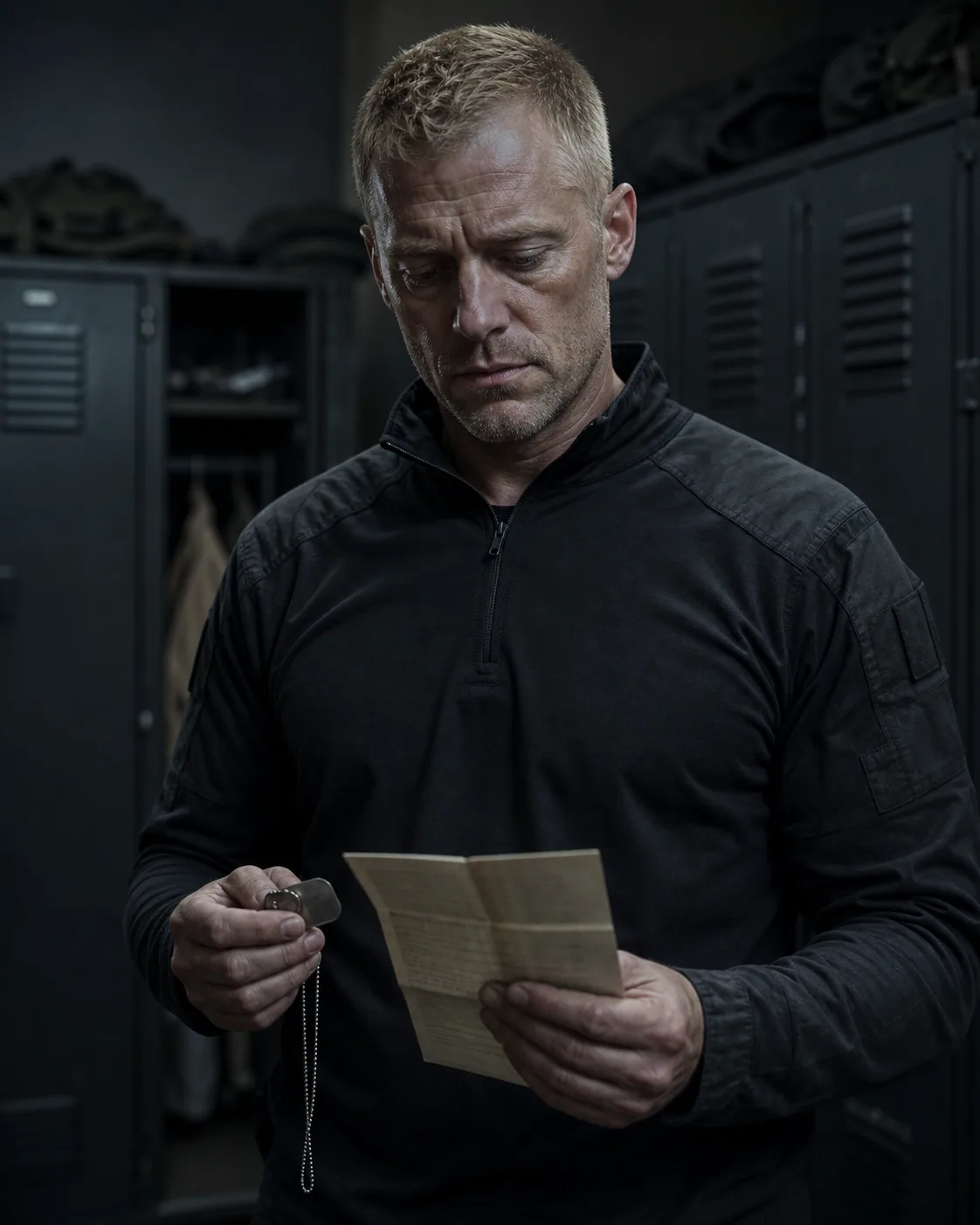
In the novel's prologue, Ulafson enters the Unit locker room in an insignia-less jacket concealing a bomb. He approaches B while other soldiers prepare for a mission. When a teammate's scanner detects that Ulafson's clothing is shielded, the situation rapidly turns violent. Ulafson draws a pistol on his comrades, tries to reach B, and ultimately detonates a device packed with materials associated with folk protections, exorcism, and anti-supernatural practice.[1]
The explosion kills or maims Unit personnel but fails to destroy B. Afterward, B discovers that Ulafson included the names of Unit dead among the bomb's materials. The attack is therefore not simply an assassination attempt. It is a ritualized act of protest and desperation built around Ulafson's belief that too many ordinary people have died because the Unit continues to deploy the undying Unute.[1]
Ulafson's short posthumous message sharpens the point. He argues that too many good people have died and questions how long the Unit can claim that it is using the weapon rather than being used by it.[2] His wording becomes a moral challenge that echoes across the novel. The Unit hires or deploys Dr. Shur in response to the psychological problem Ulafson exposes. Sunderland transfers away. Chapman leaves service. B becomes more withdrawn. Keever and Diana continue returning to the event when trying to understand later anomalies.[3]
Ulafson therefore deserves treatment as one of the most important secondary characters in the novel. His biography is not long because he survives for many chapters. It is important because the consequences of his choice persist after his death.
Service in the Unit
Before the attack, Ulafson is an experienced Unit soldier who has served alongside the people he later threatens. The prologue explicitly frames the other soldiers as people beside whom he has killed and nearly died.[1]
This establishes that his resentment is internal. He knows the Unit's routines, access controls, personnel, and operating environment. He knows B personally enough to approach him at close range. B later says or indicates that he knew Ulafson and understood some of the improvised materials built into the bomb.
The novel does not provide Ulafson's rank, branch history, place of recruitment, or exact number of missions. His proper classification is Unit soldier / operative.
The later roster sequence places him among a recognizable deployment group that includes Thakka, Chapman, Stonier, Miller, Cohn, Grayson, Keever, and B.[4]
The Unit's mortality problem
Ulafson's attack is rooted in the basic inequality at the center of Unit operations.
B can be shot, burned, dismembered, and exploded and still return. The soldiers around him cannot. Every mission therefore contains a structural temptation for commanders: use the immortal asset aggressively because his survival is nearly guaranteed, even if the operational environment becomes lethal for the humans beside him.
The novel never reduces all Unit deaths to B personally murdering his teammates. Some die to enemies, missions, crossfire, or the indirect consequences of violent operations. Ulafson's grievance is broader. He sees a growing field of dead people whose common denominator is proximity to Unute.
This distinction is important. His question is not only whether B is dangerous. It is whether an institution built around exploiting B inevitably becomes dangerous to everyone around him.
Preparation for the attack
Ulafson enters the locker room already committed to his plan. He wears a jacket zipped high around his body. A Unit scanner shows the garment as anomalously opaque or shielded, which alerts another soldier that something is wrong.[1]
The concealment demonstrates preparation. Ulafson knows enough about Unit sensors to attempt to hide the device.
He also incorporates materials that do not belong to conventional military explosives. B later identifies or interprets contents including holy water, rock salt, nails connected to horseshoes, sage, and Four Thieves Vinegar. The bomb includes charms and scraps carrying the names of Unit dead.[1]
The combination of modern explosives and traditional protective substances suggests that Ulafson no longer trusts conventional weapons to kill B. Thousands of years of warfare have already proven that bullets and bombs are insufficient. Ulafson turns instead to folklore, superstition, ritual, and accumulated beliefs about how unnatural beings might be harmed.
The article should connect this material to a separate page:
Ulafson's Anti-Unute Bomb
with object records for each confirmed component.
The locker-room attack
Ulafson approaches Unute while the deployment team prepares. B appears to sense danger before the others fully understand what is happening and holds Ulafson away at arm's length.[1]
Ulafson draws a pistol, but he points it toward the other soldiers rather than simply firing at B. He orders them to stay back while continuing to push toward his target.[1]
The scene makes clear that he expects interference. He is willing to threaten people who were previously comrades because he believes the act of killing B justifies the escalation.
Other soldiers fire on Ulafson. The bullets strike him repeatedly, yet the force of the fire also pushes him close enough to B to reach the hidden trigger.[1]
He detonates the bomb at close range.
Casualties
The explosion devastates the locker room. B survives because survival is the defining impossibility of his existence. Ordinary personnel suffer badly.[1]
The exact complete casualty list is not reconstructed in the prologue, and the surviving soldier observing the cleanup does not yet know how many wounded will fail to wake. The scene emphasizes remains being collected and identified, survivors washing pieces of friends from themselves, and the physical horror of the blast.[1]
That aftermath is essential to Ulafson's biography because it exposes the contradiction in his attempt. He acts to avenge or prevent deaths around B, but his method kills or maims the same class of ordinary soldiers whose losses motivated him.
The event therefore belongs in both:
- Unit Casualties
- Ulafson Locker-Room Bombing
B's survival
B is catastrophically injured by the explosion. His face, jaw, chest, and internal organs are damaged, yet he remains alive or begins regenerating as expected.[1]
The bomb's charms do not provide a magical exception to his immortality.
B can identify some of the substances because he has experienced similar folk practices throughout his long life. Salt, vinegar, holy substances, burned herbs, iron or horseshoe-associated materials, and protective traditions are part of humanity's repeated attempts to classify and destroy things it fears.
This gives the scene a tragic historical dimension. Ulafson thinks he has assembled a unique answer. B has already encountered versions of the same answer across centuries.
Names of the dead
The most revealing physical evidence is not one of the chemicals or charms. It is the names.
B finds a burned scrap under his ribs and recognizes that Ulafson included the names of Unit dead, specifically people who had come too close to B.[1]
The detail clarifies Ulafson's motive. He has transformed casualty memory into ritual material.
A definitive wiki should build a Unit Dead Named by Ulafson dataset only from explicitly recoverable names. It should not guess that every named soldier in the novel was on those scraps.
The names function symbolically as witnesses and accusations. Ulafson wants the dead physically present in the attempt to end the being around whom they died.
Posthumous message
A brief message from Ulafson arrives or becomes known after his death. He writes that he has seen too many good people die and challenges the Unit's belief that it is merely using B as a weapon.[2]
The exact line should be quoted only briefly in public content because of copyright limits, but its meaning should be summarized fully: Ulafson believes the institution has lost control of the moral relationship. It tells itself that B is a tool. Ulafson suspects that everyone around B has instead become part of the machinery that perpetuates his violence.
This question is one of the novel's central themes and should link directly to:
Dr. Shur's interpretation
Caldwell later states that Dr. Shur is present because Ulafson tried to kill Unute. Shur refuses to treat the episode as an inexplicable isolated madness.[2]
She identifies the conditions that can produce someone like Ulafson: repeated exposure to pain, injuries, death, survivor guilt, resentment, and the demand that personnel continue working around Unute.
Shur says the surprising thing is not that Ulafson eventually tried to remove B from the world, but that he appears to have been the first to do so from within the Unit.[2]
Her assessment should not be read as endorsement of the bombing. It is an institutional diagnosis.
Effect on Unit personnel
The aftermath produces visible personnel consequences.
Sunderland later transfers away from the Unit.[3]
Chapman leaves military service.[3]
B becomes more withdrawn, though Diana and Keever debate whether the change truly begins with Ulafson or whether the bombing merely intensifies an older pattern.[3]
The event remains a known recording that Diana later reviews in detail.[4]
This persistence makes Ulafson a kind of absent presence in the Unit. He is dead, but his critique continues to circulate because later events make the organization less, not more, certain about what B is.
Relationship with B
B appears to have liked Ulafson before the attack. Keever later notes that B liked him.[3]
That fact is one of the most painful details in the story.
Ulafson does not attack a distant monster he has never met. He attacks someone with whom he has served and with whom he had enough relationship for B to care about him.
B's reaction is not simple rage. The bombing reinforces his exhaustion. He has seen people fear him, worship him, use him, betray him, and try to destroy him across tens of thousands of years. Ulafson is another repetition, but because he comes from inside the modern team the betrayal has personal force.
This should create a relationship tag stronger than generic colleagues:
Relationship with Keever
Keever is the Unit leader present in the prologue's aftermath. He speaks with the badly injured B and later discusses the bombing with Diana.[1][3]
As commander, Keever has to interpret Ulafson in two incompatible ways. Ulafson is a subordinate who committed an attack against the Unit. He is also evidence that the command structure has failed to manage what repeated death is doing to its people.
Keever's later attention to bereaved families and other anomalies gives Ulafson's critique ongoing relevance.
Relationship with Stonier and Thakka
Ulafson's attack precedes the later Thakka crisis but belongs to the same Unit social network. The locker-room recording shows the men preparing in the same space before the bombing.[4]
Stonier's grief over Thakka later demonstrates the kind of loss Ulafson believed was destroying personnel.
Thakka's impossible return then complicates Ulafson's premise even further. If ordinary death can be interrupted by another force, the Unit's relationship to mortality is stranger than Ulafson understood.
Personality
The novel gives Ulafson a concentrated rather than expansive characterization.
Before the attack he is a functioning soldier who has served repeatedly beside the people he later threatens.[1] During the attack he is emotional, crying, determined, and willing to die. The preparation of the bomb shows patience and obsessive planning.
His posthumous note reveals moral anger rather than simple personal hatred. He believes he is acting in response to a pattern of deaths and institutional self-deception.[2]
These traits should be described without romanticizing him. His grievance is understandable. His action is catastrophic and kills or injures comrades.
Skills and equipment
Military training
Ulafson is an experienced Unit operative capable of participating in black-operations deployments.
Knowledge of Unit security
He attempts to shield his bomb from detection, suggesting familiarity with internal scanning systems.[1]
Improvised explosive construction
He successfully constructs a wearable explosive device capable of causing extensive casualties.
Folklore and anti-supernatural research
The bomb incorporates a deliberate range of traditional protective and purifying materials. This implies substantial investigation into folklore or occult practices even though the novel does not show where he obtained the information.[1]
Death
Ulafson is shot repeatedly by fellow Unit personnel while trying to reach B. He survives long enough to trigger the bomb at close range and dies in the explosion.[1]
His remains and the surviving fragments of the device are later studied by the Unit.[3]
Database cause-of-death should be:
Gunshot wounds and self-detonated explosive device, with uncertainty noted if an edition does not identify which injury was immediately fatal.
Legacy
Ulafson's legacy is larger than his direct role.
He exposes the emotional debt hidden inside the Unit's operational success. His attack causes casualties, personnel departures, psychological intervention, and renewed scrutiny of B's effect on the people around him.
His central question survives because the novel never gives the Unit an easy answer. B is a weapon, a person, an immortal, a strategic resource, and a force of historical change all at once. Any institution that pretends only one of those descriptions matters will eventually damage both B and the people assigned to him.
Appearances
- The Book of Elsewhere, “Prologue” and later recollections / recordings
Canon limitations
Not established in the cited material:
- age
- birthplace
- rank
- family
- exact military branch
- complete mission history
- names of all dead colleagues he memorialized
- exact source of his folklore research
References
[1] Keanu Reeves and China Miéville, The Book of Elsewhere, Del Rey, 2024, “Prologue,” Ulafson's locker-room attack, bomb, Unit casualties, and B's survival.
[2] The Book of Elsewhere, later Caldwell and Dr. Shur discussion of Ulafson plus Ulafson's posthumous message about Unit deaths and the weapon relationship.
[3] The Book of Elsewhere, Diana and Keever discussion of the bombing's aftermath, including Sunderland's transfer, Chapman's departure, and B's behavior.
[4] The Book of Elsewhere, later review of the recorded locker-room sequence naming Thakka, Chapman, Stonier, Miller, Cohn, Grayson, Keever, and Ulafson.