Selected scenes
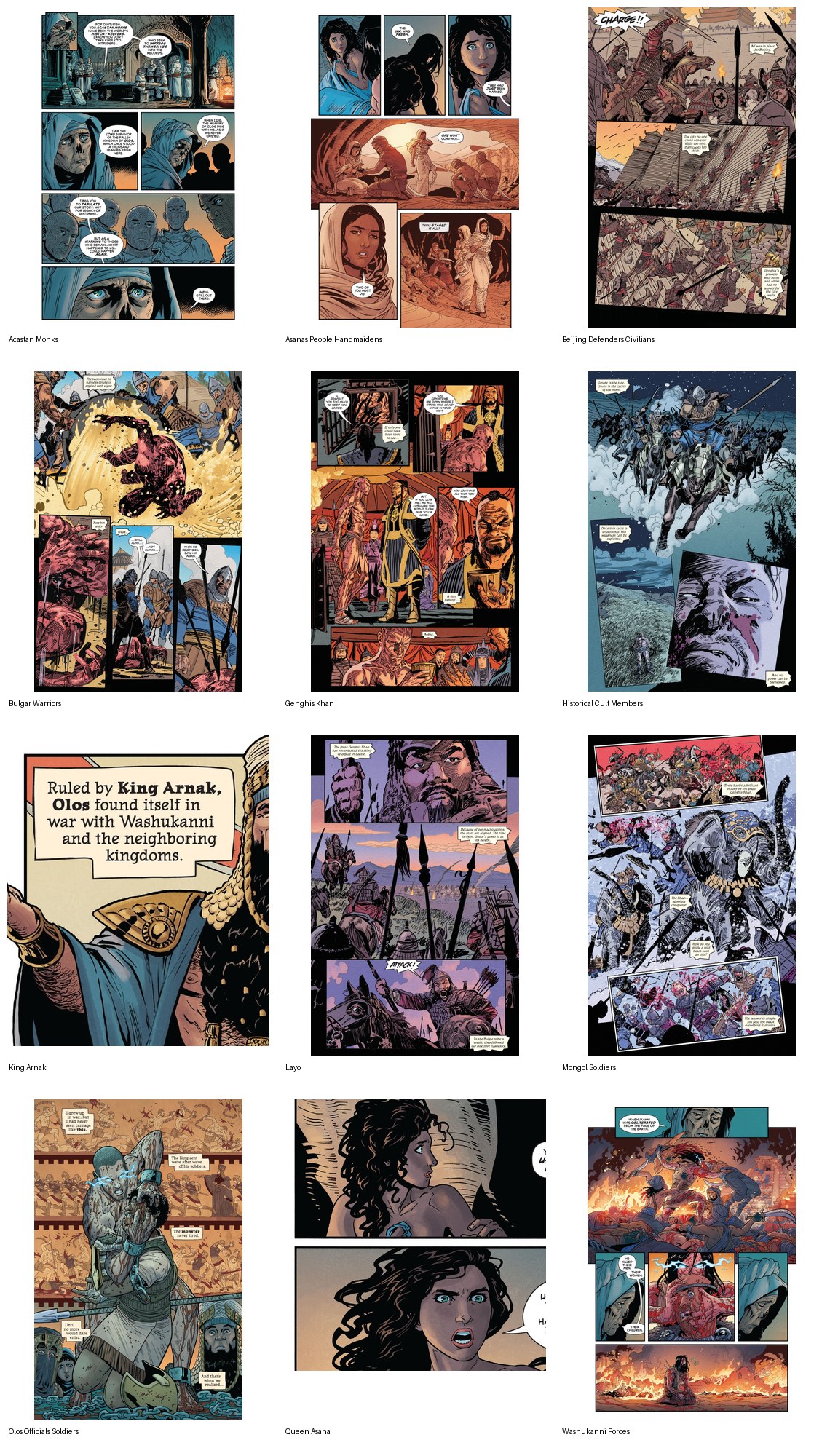
BRZRKR in pictures.
Spoilers: This article covers the late-antique historical material in BRZRKR: The Lost Book of B. #1.
Hermeias of Oxyrhynchus belongs to the late-antique world of The Lost Book of B., where B's existence is interpreted through texts, laboratories, battlefields, and the movement of knowledge between cities. Hermeias is associated with Oxyrhynchus and with the human networks that preserve or transform alchemical ideas. The character's importance lies less in a single dramatic power than in the way a name, a place, and a written tradition connect the physical life of B to the people who come after him.
Oxyrhynchus and the written world
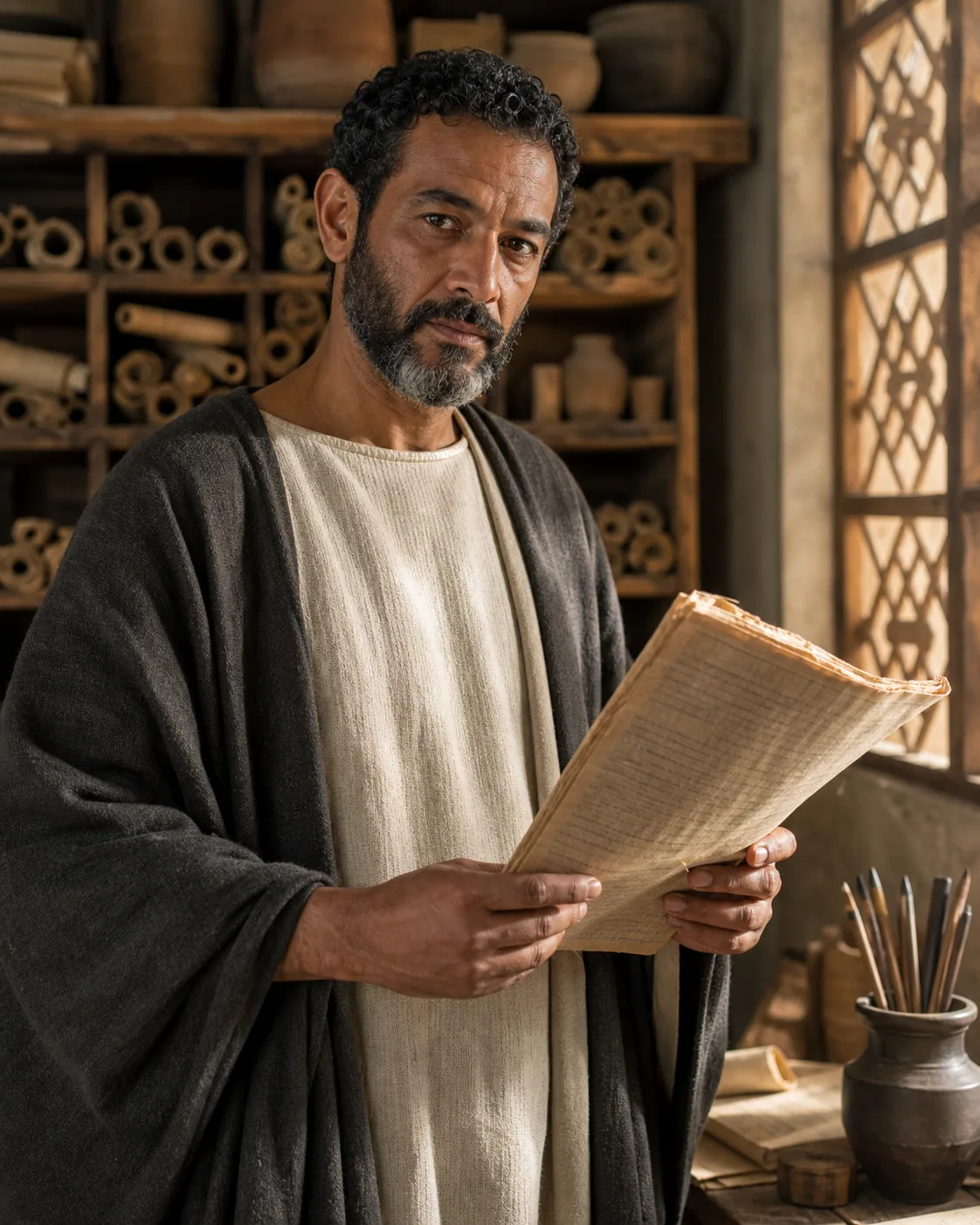
Oxyrhynchus evokes a city of documents, scholarly exchange, and fragile preservation. In BRZRKR, the setting supports a story in which an extraordinary body is never encountered by only one kind of person. A record can pass from a witness to a reader, from a reader to an experimenter, and from an experimenter to someone who wants to use the result. Hermeias belongs to that chain of transmission.
The city is not merely a backdrop for a laboratory. It is a place where knowledge has a social life. Texts need people to copy, translate, hide, and interpret them. A record of B can survive while the meaning of the original encounter changes. Hermeias's association with Oxyrhynchus gives the late-antique branch a human route through which uncertainty travels.
Connection to Zosimus
Hermeias is connected to Zosimus's alchemical operation and to the people who carry its materials and ideas. The connection should not be inflated into a claim that Hermeias designed every apparatus or agreed with every conclusion. The story's strength comes from the different positions within the chain. Zosimus experiments; Theosebeia protects; Lugalṭur develops; Hermeias belongs to the world in which those acts can be remembered and interpreted.
That position matters because an experiment's afterlife may be more influential than its original intention. A later reader can treat a partial account as a recipe. A name can become an authority attached to words the person never wrote. Oxyrhynchus offers the setting for that process.
B as a historical presence
B's life is too long for any one archive of memory. By the late-antique period, he has already become a figure whose actions can be retold without his presence. Hermeias encounters the consequences of that distance. B may be a person in one scene and a report in another. The difference affects how people decide what they owe him.
The alchemical branch repeatedly asks whether a story about B can be used without claiming B himself. Hermeias's context makes the question visible. A text may describe regenerative material, a strange visitor, or a method for life extension. The reader can understand why the account matters while recognizing that the account is incomplete.
Routes and material knowledge
Hermeias is connected to routes around Alexandria and Oxyrhynchus, where substances, instruments, and manuscripts move with merchants, scholars, soldiers, and fugitives. The geography explains why alchemy can become a distributed practice. No single laboratory possesses the whole history. Knowledge is assembled from fragments that arrive at different times and carry different levels of reliability.
The routes also expose the material cost. A substance has to be found or taken. A body has to be transported. A manuscript can be stolen. The alchemical project is therefore tied to logistics and power, not only to ideas. Hermeias's place in the setting helps keep the human network visible.
Relation to Lugalṭur
Lugalṭur's creation gives the late-antique material its most consequential result. Hermeias is connected to the period in which the derived being's existence can be recorded, pursued, or interpreted. The relationship is not necessarily one of direct guardianship or command. It is a connection through the world that turns an experimental result into a historical subject.
Lugalṭur's later independence challenges every record that calls him a vessel or specimen. Hermeias's context belongs to that struggle over language. A written description can help preserve a person's history, but it can also reduce the person to the purpose of the experiment. The story leaves room for both possibilities.
History and invention
The name Oxyrhynchus and the broader late-antique setting draw on real history. The events involving B, Zosimus, Theosebeia, and Lugalṭur are part of BRZRKR's fiction. Hermeias should therefore be read as a character within the novelistic and one-shot continuity, not as evidence that the real historical record contains B's immortality.
The distinction enhances the story rather than weakening it. Real places give the fiction texture and show how knowledge might move. Fictional events let the series explore the ethics of creating life and using history without pretending that the exploration is a lost documentary.
What is not known
The publication does not give Hermeias's complete biography, occupation, family, appearance, or final fate. It does not specify every text the character handled or every meeting with B and Zosimus. The record is strongest at the level of setting and connection: Hermeias belongs to Oxyrhynchus and to the late-antique movement of alchemical knowledge around B.
Those limits are appropriate for a character whose meaning comes from transmission. Hermeias is important because the story shows how a person can preserve a trace of a larger history without controlling its interpretation.
Significance
Hermeias of Oxyrhynchus gives The Lost Book of B. a bridge between living experience and written memory. B's body can survive the centuries, but the accounts about him pass through people who can misunderstand, preserve, or exploit them. Hermeias belongs to that human interval. The character reminds the reader that a record is never the same as the life it describes, and that the route from one to the other is part of BRZRKR's story.
The name also anchors the alchemical branch in a community rather than a single genius. Knowledge of B moves through teachers, assistants, travelers, and readers who may never meet the immortal himself. Hermeias belongs to that collective human effort to preserve meaning, even when preservation cannot prevent distortion.
[1] Reeves, Kindt, Garney, Crabtree, and Robins, BRZRKR: The Lost Book of B. #1, Oxyrhynchus, Hermeias, Zosimus, alchemical records, Lugalṭur, and late-antique routes.