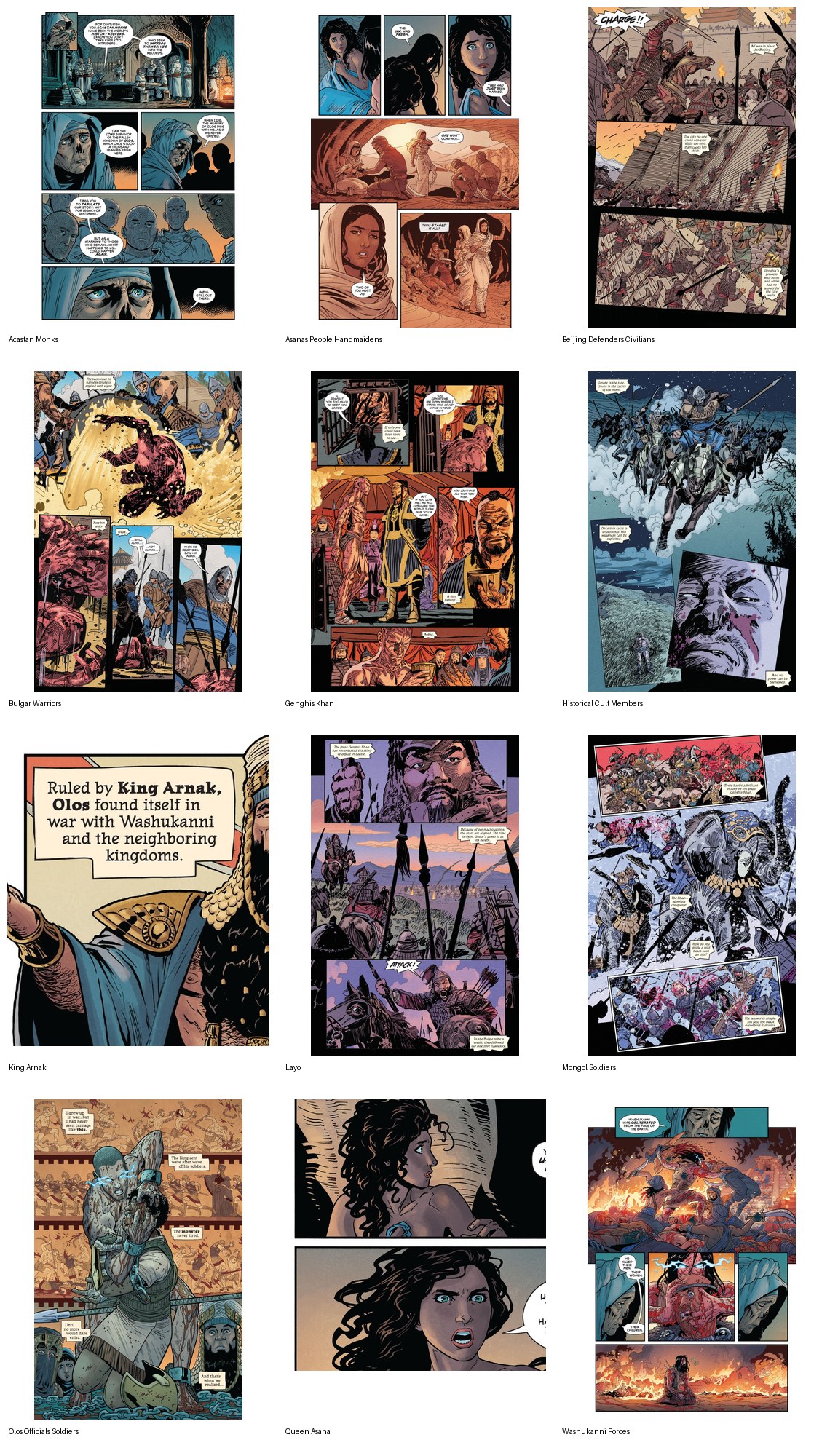
Selected scenes
BRZRKR in pictures.
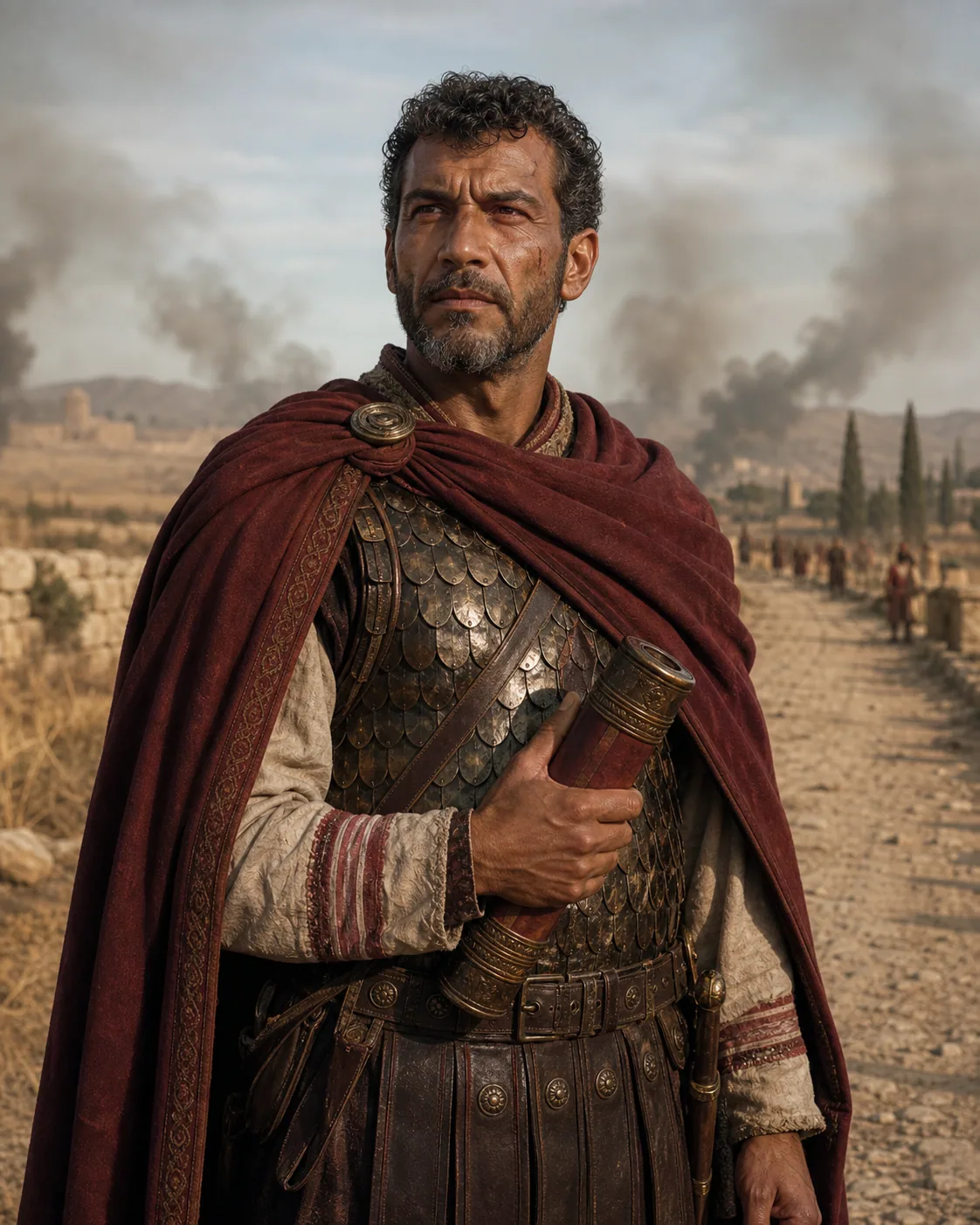
Spoilers: This article covers the historical material associated with Domitianus in BRZRKR: The Lost Book of B. #1.
Domitianus is one of the historical figures connected to the late-antique and alchemical branch of BRZRKR. His role is tied to the battlefield, the movement of bodies and texts, and the wider attempt to understand B's condition through human institutions. Domitianus is not presented as a second B or as a complete explanation of the ancient world. He matters because his setting shows how B-related knowledge travels through people who are concerned with power, survival, and the practical consequences of experiments.
A figure at the edge of the laboratory
The Lost Book of B. moves between controlled spaces and public violence. Zosimus's laboratory seeks to transform life through substances and machinery, while battlefields expose bodies to forces that no apparatus can fully control. Domitianus belongs to the latter environment. His presence places the alchemical pursuit inside the political and military world that supplies its bodies, patrons, and routes.
The connection is important because alchemy can appear abstract when described only through prima materia or the Water of Life. Domitianus's battlefield reminds the audience that the desire to defeat death is formed in a world where death is ordinary. A person who studies B's survival is not removed from violence. The study is one response to violence, and it may reproduce the same power relationships.
Relation to B
Domitianus encounters B as part of a historical chain rather than as the modern program's subject. B's presence makes an impossible contrast. Soldiers and rulers face injury as a final possibility, while B can recover. The contrast invites people to use him as proof that ordinary death can be defeated, but it can also make them resent or fear him.
The story does not give Domitianus a complete personal philosophy about B. The supported relationship is shaped by the world around him: battlefield authority, historical memory, and the circulation of ideas that later reach Zosimus and Lugalṭur. This restraint keeps Domitianus distinct from characters whose motivations are explicitly described.
The battlefield as evidence
A battlefield produces material traces—wounds, weapons, fragments, and bodies—that can be carried into a laboratory. Domitianus's setting therefore connects directly to the theme of separated material. B's body may survive, but the physical remains of a battle can become evidence for someone else's project. The movement from field to laboratory changes the meaning of what was left behind.
Domitianus is part of that movement even when he is not the person conducting the experiment. His era shows how knowledge can be gathered through conflict and then presented as neutral discovery. The people who suffer the battle may never know how their remains will be used. The historical branch keeps that ethical problem visible.
The routes of late antiquity
Domitianus is connected to the geography around Oxyrhynchus, Alexandria, and the routes through which texts and materials move. The names anchor the story in a world of cities, armies, libraries, and changing political authority. A formula can be copied, mistranslated, or hidden. A body can be transported before anyone has agreed what it means.
The route also places Domitianus beside Hermeias and Zosimus without making them a single team. The characters occupy different positions in the chain. One may witness, one may record, and one may experiment. The value of the connection lies in the way the same mystery changes as it passes between people.
History and fiction
Domitianus is associated with a historical name, but the BRZRKR events are fictional. The story uses real-world geography and late-antique atmosphere to ask questions about mortality, knowledge, and power. It does not claim that the historical person lived through B's exact experiences or that the fictional alchemical apparatus is a lost real invention.
This distinction matters because B's long life crosses real history without replacing it. Domitianus's presence adds a fictional witness to the period, not a secret author of every event. The battlefield remains a human place with its own causes and consequences.
What survives
Domitianus's importance is connected to what survives after the immediate conflict. A name can remain in a text while the person disappears. A battlefield can become a route on a later map. A record can preserve a result and lose the circumstances that produced it. The Lost Book of B. uses those partial survivals to explain why later generations can know about B without understanding him.
The same pattern shapes the alchemical operation. Zosimus and Theosebeia work with knowledge that has already passed through other hands. Lugalṭur becomes a new life inside a history that he did not choose. Domitianus's place in the chain shows that historical memory is made from fragments, not from a complete view.
Limits of the character record
The publication does not provide Domitianus's full biography, family, rank, or final fate. It does not establish every conversation with B or identify a complete relationship to Zosimus's laboratory. Those details should remain open rather than being filled with invented military history.
What the story does establish is enough to give Domitianus significance: he belongs to the late-antique setting where warfare, travel, and attempts at life extension meet. His presence gives the alchemical branch a public world and a human cost.
Domitianus also helps explain why later accounts of B can feel both scholarly and violent. A text may be copied by a careful hand after its original owner has died in battle. A report may preserve the result of an experiment while omitting the person whose body made the experiment possible. The character's place in that chain keeps the late-antique story from becoming an isolated laboratory fable.
In that respect, Domitianus's importance is cumulative. The character does not need to hold the final answer to B's life. A witness who passes through the period, leaves a trace, or becomes part of the material route can affect what later people believe. The late-antique branch is built from those partial presences, and Domitianus helps give the chain a human face.
Significance
Domitianus represents the historical person who stands between B's impossible body and the theories built around it. He reminds the reader that alchemy does not begin in a clean room and that scientific ambition is always connected to a society with armies, patrons, and casualties. His appearance expands B's history without turning the past into a simple list of experiments.
[1] Reeves, Kindt, Garney, Crabtree, and Robins, BRZRKR: The Lost Book of B. #1, Domitianus, late-antique battlefield, alchemical history, and the routes connected to Zosimus and Hermeias.